


Quran Tafseer in English – Trusted Translations and How to Choose Between Them
Searching for reliable quran tafseer in english reflects a genuine desire to understand God’s revelation beyond the depth of classical Arabic. Because the beauty of the Quran is woven into the richness of the Arabic language, English tafseer and translation resources are essential for making its wisdom accessible to people everywhere.
There is no single source of quran tafseer in english that suits everyone, since the right choice depends on accuracy, clarity, and how well a translator or scholar conveys the spiritual and linguistic depth of the original Arabic text.
This article explains why English tafseer and translation resources matter, the main categories available today, how to evaluate one before relying on it, and which specific translations and tafseer works are most trusted by teachers and students.
What You Will Learn
• Why English translations of the Quran matter for Muslims and new learners alike
• The three main categories of English Quran translations and how they differ
• Practical criteria for judging whether a translation is accurate and reliable
• Specific translations and tafseer works recommended by teachers and scholars
• How guided, teacher-led study can deepen your understanding beyond any single translation
Quran Tafseer in English
Quran tafseer in english refers to trusted translations and scholarly explanations that convey the original Arabic meaning accurately while remaining clear enough for the reader to genuinely understand and reflect on it, rather than simply recite the words.
The Role of English Quran Translations in Understanding the Meaning of the Quran
English translations of the Quran matter because they allow Muslims who do not speak Arabic to engage with the text on a deeper level instead of treating it as unfamiliar or distant words. Works such as Saheeh International and The Clear Quran have helped millions of Muslims build a stronger, more personal connection with their faith.
English translations also help readers apply the Quran’s lessons and core ideas to modern daily life, and they give non-Muslims a clear, accessible way to learn about Islamic beliefs, values, and the Quran’s own words.
The Quran itself points to the wisdom of delivering a message in a language people understand, as stated in Surah Ibrahim:
وَمَا أَرْسَلْنَا مِن رَّسُولٍ إِلَّا بِلِسَانِ قَوْمِهِ لِيُبَيِّنَ لَهُمْ
“And We did not send any messenger except [speaking] in the language of his people to state clearly for them.” (Surah Ibrahim, 14:4)
This principle is exactly why English translations exist: to state the Quran’s message clearly for readers who think and understand best in English.
Read also: What Is Tafsir? Your Simple Guide to Quranic Interpretation
Types of Quran Translations Available in English
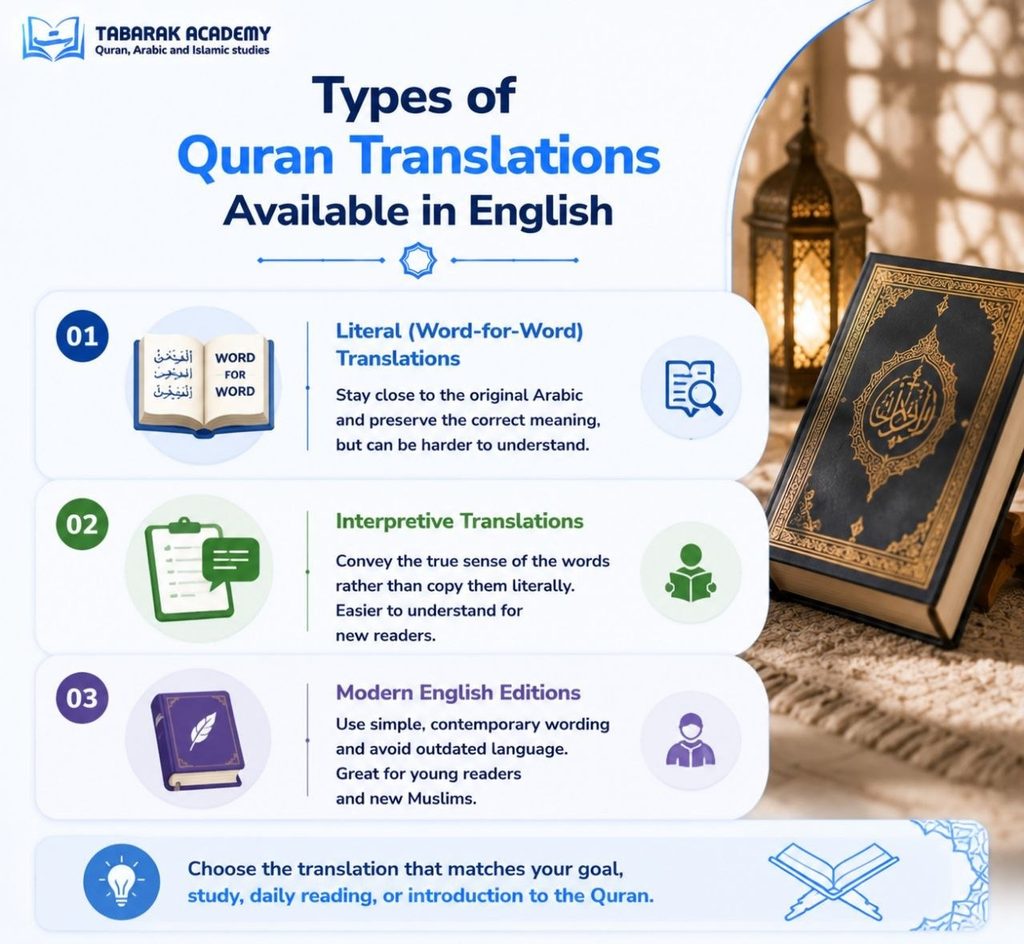
Understanding the main categories of English Quran translation helps you choose the version that fits your purpose, whether that is deep study, daily reading, or simple introduction to the text.
1. Literal (Word-for-Word) Translations
Literal translations stay closely tied to the original Arabic wording and preserve the correct meaning, but they can be difficult for readers unfamiliar with Islamic terminology or Arabic grammar. Scholars and serious students often prefer this category for in-depth study.
2. Interpretive Translations
Interpretive translations aim to convey the true sense of the words rather than copy them literally. They are easier to understand and well suited to new readers who want a clear picture of the meaning without needing extensive background knowledge.
3. Modern English Editions
Modern editions use simple, contemporary wording to make the Quran easier to read, and they avoid outdated or overly formal language. This makes them especially popular with young readers and new Muslims.
How to Evaluate an English Quran Translation Before Choosing One
Choosing an English Quran translation requires more than selecting the most popular edition. Because translation involves conveying the meanings of Quranic Arabic into another language, differences in wording, interpretation, terminology, and explanatory notes can significantly affect how easily a reader understands a verse.
Before relying on a translation for regular Quran study, evaluate it using the following four criteria.
1. Check How the Translation Balances Literal Meaning With Necessary Explanation
A useful Quran translation should remain as faithful as possible to the Arabic while still communicating the intended meaning clearly in English.
An extremely literal word-for-word rendering can sometimes sound unnatural or leave important meanings unclear because Arabic expressions and grammatical structures do not always transfer directly into English. At the same time, excessive interpretation can blur the distinction between translation and Tafseer.
When comparing translations, ask:
- Does the English preserve the central meaning of the verse?
- Are explanatory additions clearly distinguished from the translated text?
- Does the translator avoid unnecessarily inserting interpretation into the verse itself?
- When a Quranic term has no precise English equivalent, is additional context provided?
A practical approach is to compare the same Ayah across two or three respected translations. If their wording differs significantly, consult a reliable Tafseer to understand why.
2. Choose a Translation With Clear English and Understandable Islamic Terminology
Accuracy is essential, but a translation is less useful if you constantly struggle to understand its English.
Some Quran translations use formal or older English, while others use contemporary language designed to be more accessible to modern readers. Neither approach is automatically better for every learner.
Choose an edition appropriate for your current level. A beginner may benefit from straightforward English and brief explanations of Islamic terminology, while a more advanced student may prefer a translation that preserves more Arabic terms and linguistic detail.
Pay particular attention to recurring terms such as Taqwa, Shirk, Salah, Zakah, Iman, Kufr, and Sunnah. These concepts may carry meanings broader than a single English equivalent can communicate.
The best translation for you is therefore not simply the easiest one to read, but one that combines readability with sufficient precision.
Experience Our Interactive Learning
Curious about how we teach? Watch these brief video clips from our recent live sessions to see our structured curriculum, advanced learning platform, and dynamic student-teacher interactions firsthand.
3. Verify the Translator’s Qualifications and the Publisher’s Scholarly Standards
Before choosing a translation, look beyond the cover and examine who produced, reviewed, and published it.
Consider whether the translator demonstrates knowledge of:
- Quranic and classical Arabic;
- Tafseer and Quranic sciences;
- Islamic terminology;
- Arabic grammar and rhetoric;
- the scholarly context behind verses that cannot be understood accurately through isolated word-for-word translation.
Also check whether the edition has undergone scholarly or editorial review and whether explanatory notes clearly identify interpretation rather than presenting it as the Quranic text itself.
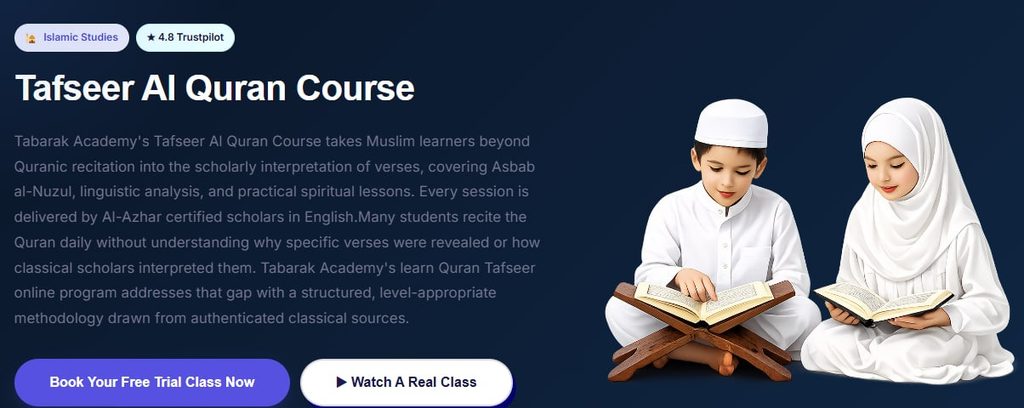
4. Compare Multiple Translations and Use Tafseer When the Meaning Is Unclear
No English translation can reproduce every linguistic, rhetorical, and interpretive dimension of the original Quranic Arabic.
For important or difficult passages, compare more than one reliable translation instead of treating a single English rendering as the only possible wording.
When translations differ, do not automatically assume that one must be wrong. The difference may reflect alternative ways of expressing an Arabic word, grammatical construction, or interpretation in English.
Use a reliable Tafseer when you need to understand:
- the context of a verse;
- why translators chose different English wording;
- the meaning of important Arabic terms;
- how a verse relates to surrounding Ayat;
- explanations preserved in the Islamic scholarly tradition.
This creates a stronger study method:
Read the Arabic → read a trusted translation → compare when necessary → consult Tafseer for deeper context.
Recommended English Quran Translations and Tafseer Books for Beginners
The following works are widely recommended by teachers and students for their accuracy, clarity, or depth of explanation, depending on what a reader needs.
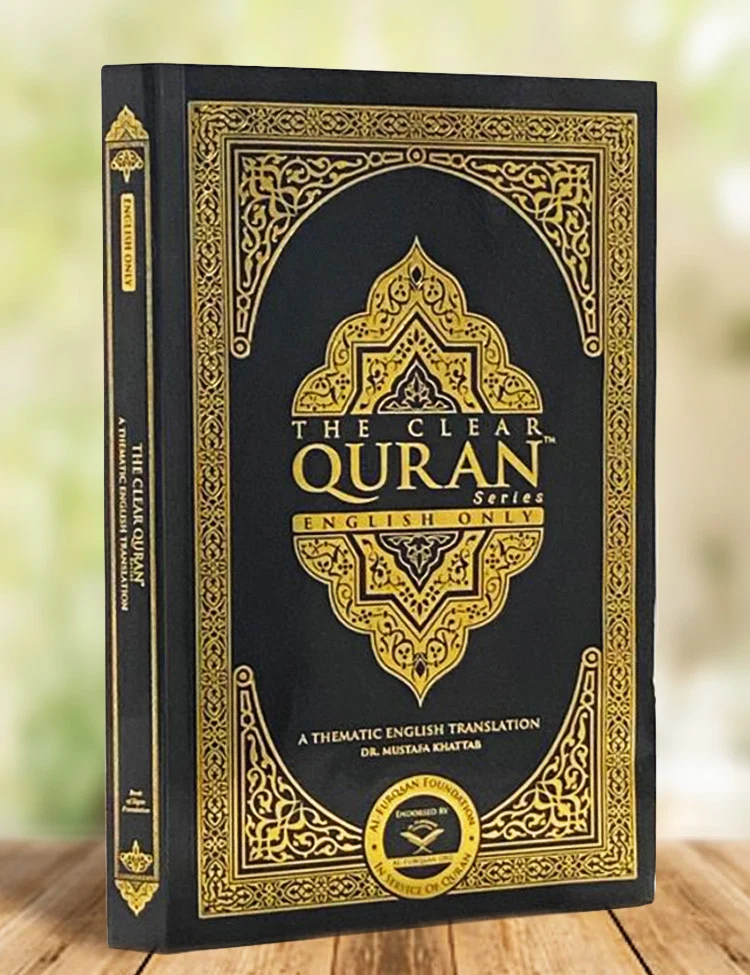
The Clear Quran — Dr. Mustafa Khattab
The Clear Quran is a modern interpretive translation with clear, contemporary English and short notes that clarify meaning, making it a strong choice for beginners and general readers.
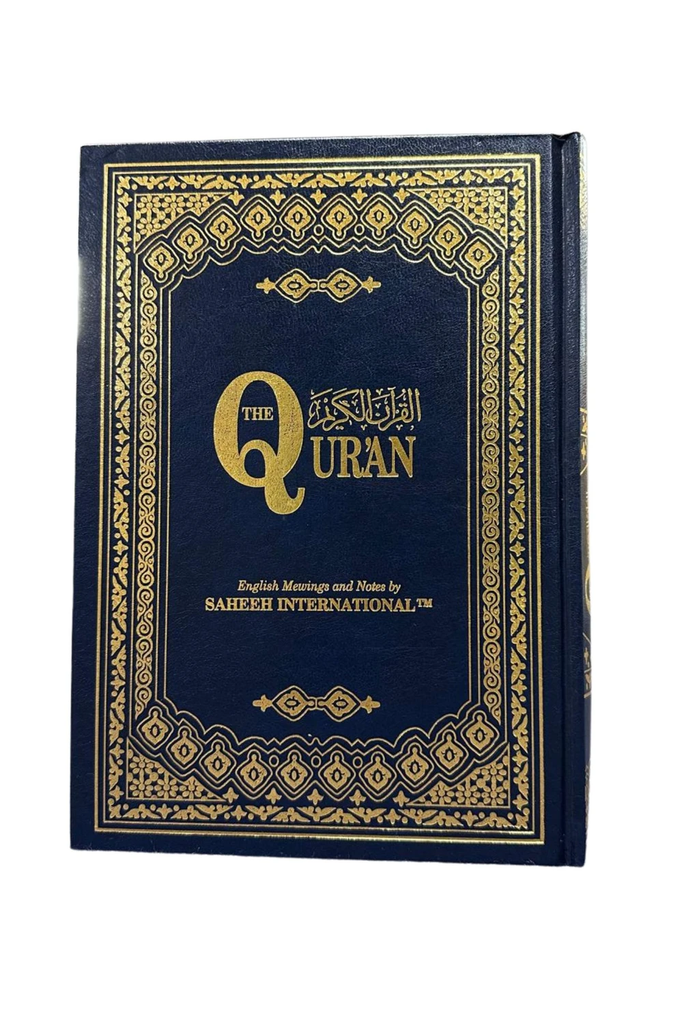
Saheeh International
Saheeh International is an accurate, widely trusted translation that follows mainstream Sunni understanding while keeping its wording concise and direct.
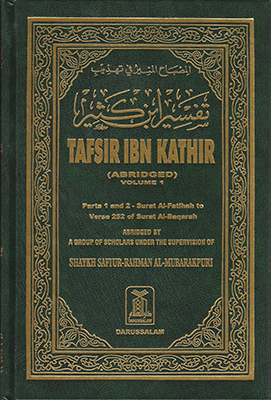
Tafsir Ibn Kathir (English Edition)
Tafsir Ibn Kathir is the English edition of a classical, narration-based tafseer for readers who want detailed, traditional explanation grounded in hadith and the statements of the Prophet’s companions.
Read also: Which Tafsir Should Beginners Read: Ibn Kathir or Al-Jalalayn?
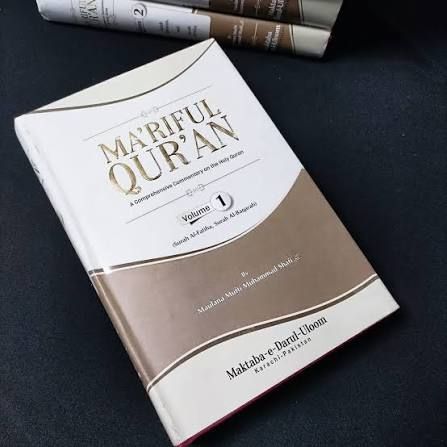
Ma’ariful Quran — Mufti Muhammad Taqi Usmani
Ma’ariful Quran is a comprehensive, carefully translated tafseer by Mufti Muhammad Taqi Usmani, offering detailed explanation for readers who want a fuller scholarly treatment of each verse.
Read also:6 Easy-to-Read English Tafsir Books to Start With Today
Steps to Correct Understanding While Reading Tafseer
Reading a translation correctly is about more than the words on the page. A few simple habits can protect you from misunderstanding a verse.
1. Read Each Verse in Its Context
Avoid reading a single verse in isolation from its surah or the reasons behind its revelation, since context often changes how a verse should be understood and applied.
2. Focus on Intention, Not Just Speed
The Prophet Muhammad reminded believers that the value of any action depends on the intention behind it, a principle that applies directly to how the Quran should be read:
إِنَّمَا الْأَعْمَالُ بِالنِّيَّاتِ
“Actions are judged by intentions.” (Sahih al-Bukhari, Hadith 1)
Reading the Quran with the sincere intention of guidance and reflection, rather than rushing through the pages, is what turns translation into genuine understanding.
3. Learn With Guidance Instead of Alone
Even the clearest translation benefits from a teacher who can answer questions and correct misunderstandings as they arise. This is the approach used at Tabarak Academy, where Quran, Tajweed, and tafseer are taught together in live, one-on-one sessions.
Step Inside Our Virtual Classrooms
See our engaging teaching methods in action! watch real snippets of our live classes and discover how our expert instructors make learning interactive, memorable, and inspiring for every student.
Book Your Free Trial Quran Class Today
Want to move beyond comparing translations on your own and study the Quran with real guidance?
Book Your Free Trial Class with a qualified teacher at Tabarak Academy and get personalized Quran, Tajweed, and tafseer lessons for children, adults, and families anywhere in the world.
Our Islamic Studies Courses
- Online Islamic Studies Classes
- Islamic Studies for Beginners Course
- Islamic Studies Classes for Kids
- Islamic Studies for Adults Course
- Islamic Studies for Ladies Course
- Islamic Studies for New Muslims Course
- Tafseer Al Quran Course
- Quranic Sciences (Uloom Al Quran) Course
- 5 Pillars of Islam for Kids Course
- Islamic Summer Camp
Final Thoughts on Quran Tafseer in English
Quran tafseer in english is not a single fixed answer, but a range of trusted translations and explanations that match your reading level, your purpose, and your appreciation for the Quran’s original meaning. Literal, interpretive, and modern editions each serve a different kind of reader.
The most important takeaway is that accuracy, clarity, translator credibility, and using more than one source all matter more than simply choosing the most popular title. Pairing any translation with guided, teacher-led study builds a far deeper and more reliable understanding of the Quran.
Frequently Asked Questions
What is the most accurate English translation of the Quran?
Saheeh International is widely regarded as one of the most accurate and reliable English translations, since it closely follows mainstream Sunni understanding while remaining direct and concise.
Which English Quran translation is best for beginners?
The Clear Quran is commonly recommended for beginners because it uses clear, modern English along with short explanatory notes.
Is it necessary to read tafseer along with a translation?
Reading tafseer alongside a translation is not strictly required, but it is highly recommended because tafseer explains context and reasons for revelation that a translation alone cannot fully convey.
Can non-Muslims read English translations of the Quran?
Yes, English translations are commonly used by non-Muslims who want to learn about Islamic beliefs and values directly from the text itself.
Should I rely on only one English translation?
No, comparing more than one translation gives a fuller picture of a verse’s meaning and highlights differences in interpretation. Studying with a qualified teacher, such as those at Tabarak Academy, can help you navigate these differences correctly.