

10 Virtues of the Holy Quran – Benefits of Reading and Memorizing the Quran
The Holy Quran is the Book of Allah, revealed to Prophet Muhammad ﷺ as guidance for humanity. It teaches believers how to worship Allah, understand their purpose, build good character, and face life’s challenges with faith and patience.
The virtues of the Holy Quran include the reward of reciting it, learning it, teaching it, reflecting on its meanings, and living by its guidance. Some of these virtues bring benefits in this life, and others are rewards promised in the Hereafter.
In this guide, we go through ten virtues of the Holy Quran, each with its source from the Quran and authentic hadith. We also cover the benefits of memorizing Quran, the effect of Quran on the heart, and what research says about the Quran and health.
1. The Quran Is a Source of Guidance
The first and greatest virtue of the Holy Quran is guidance. Allah describes His Book at the very beginning of Surah Al-Baqarah:
ذَٰلِكَ الْكِتَابُ لَا رَيْبَ ۛ فِيهِ ۛ هُدًى لِّلْمُتَّقِينَ
“This is the Book about which there is no doubt, a guidance for those conscious of Allah.”
Al-Baqarah 2:2
Allah does not only say that the Quran contains guidance. He calls the Book itself guidance, and He names who benefits from it most: those who approach it with taqwa.
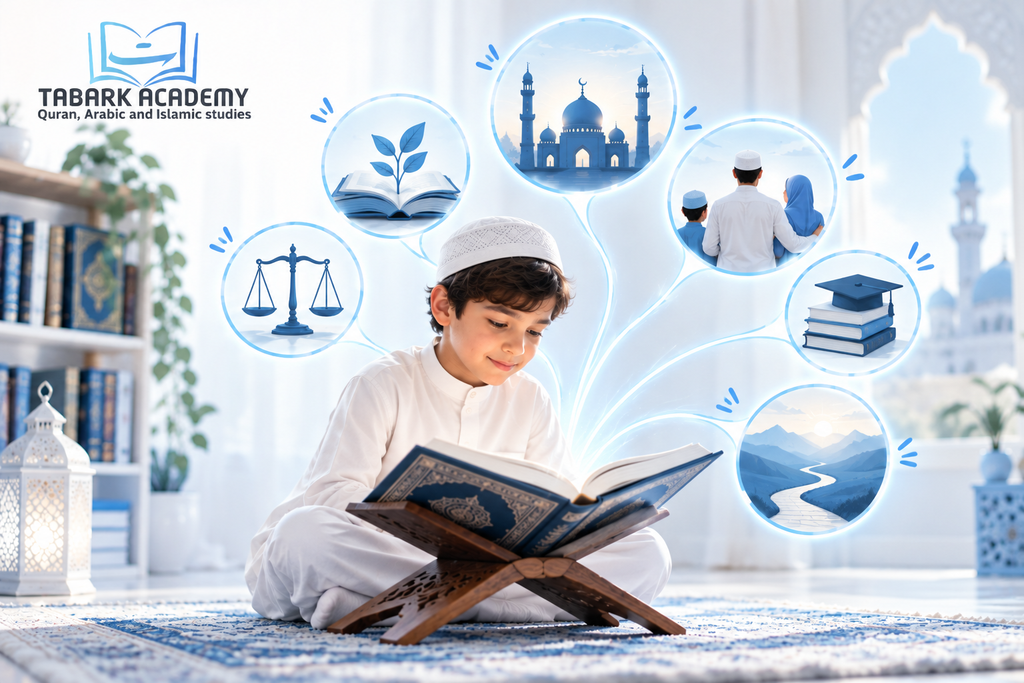
In Surah Al-Isra, Allah describes the kind of guidance the Quran gives:
إِنَّ هَٰذَا الْقُرْآنَ يَهْدِي لِلَّتِي هِيَ أَقْوَمُ
“Indeed, this Quran guides to that which is most upright.”
Al-Isra 17:9
The word aqwam means “the most upright” or “the most balanced”. It covers belief, worship, family life, business, and character. This guidance becomes real when you let it shape your decisions. A verse about patience reminds you to meet hardship with sabr, and a verse about gratitude helps you notice Allah’s blessings.
2. Every Letter Recited Brings Ten Rewards
This is one of the best-known virtues of reading the Quran. The Companion Abdullah ibn Mas’ud رضي الله عنه reported that the Messenger of Allah ﷺ said:
مَنْ قَرَأَ حَرْفًا مِنْ كِتَابِ اللَّهِ فَلَهُ بِهِ حَسَنَةٌ، وَالْحَسَنَةُ بِعَشْرِ أَمْثَالِهَا، لَا أَقُولُ الم حَرْفٌ، وَلَكِنْ أَلِفٌ حَرْفٌ، وَلَامٌ حَرْفٌ، وَمِيمٌ حَرْفٌ
“Whoever reads a letter from the Book of Allah will have a good deed for it, and a good deed is multiplied by ten. I do not say that Alif-Lam-Mim is one letter. Rather, Alif is a letter, Lam is a letter, and Mim is a letter.”
Jami’ at-Tirmidhi 2910, graded hasan sahih by at-Tirmidhi
The Prophet ﷺ chose Alif-Lam-Mim as his example, which are letters whose meaning only Allah knows. This shows that the reward is attached to the act of recitation itself, even before understanding. The reward is counted per letter, not per page or per minute.
| What you read | Minimum reward |
| Bismillah (19 letters) | 190 hasanat |
| One page (~550 letters) | ~5,500 hasanat |
| One Juz (~20 pages) | ~110,000 hasanat |
This reward is also open to beginners who still struggle. Aishah رضي الله عنها reported that the Messenger of Allah ﷺ said:
الْمَاهِرُ بِالْقُرْآنِ مَعَ السَّفَرَةِ الْكِرَامِ الْبَرَرَةِ، وَالَّذِي يَقْرَأُ الْقُرْآنَ وَيَتَتَعْتَعُ فِيهِ وَهُوَ عَلَيْهِ شَاقٌّ لَهُ أَجْرَانِ
“The one who is skilled in the Quran will be with the noble and righteous scribes (the angels). And the one who recites the Quran and stumbles over it, finding it difficult, will have two rewards.”
Sahih Muslim 798, also narrated in Sahih al-Bukhari 4937
Scholars explain that the one who struggles gets one reward for the recitation and a second for the effort and hardship. So stumbling is not a reason to stop. The skilled reciter is not given “two rewards”, but he is given something greater: a place with the noble angels.
If reading Arabic is still hard for you, every step you take is part of your worship. Our Quran Reading Course helps you take those steps with a teacher.
3. The Effect of Quran on the Heart: It Softens and Nourishes
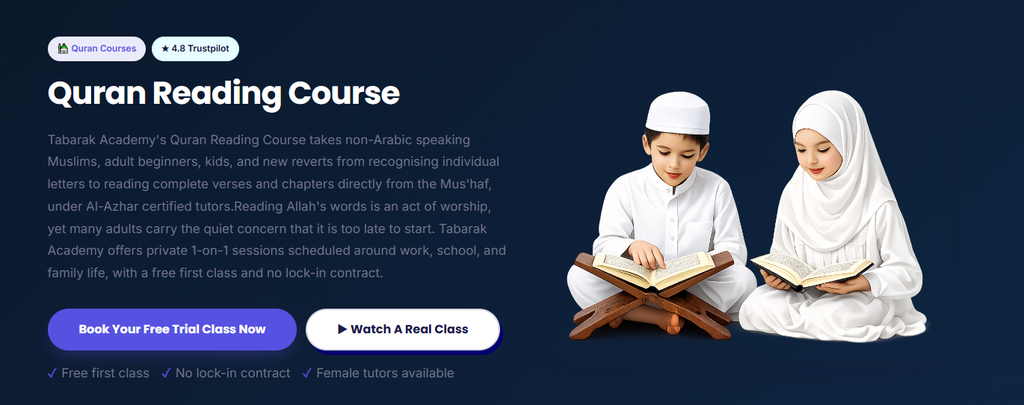
Allah describes the effect of the Quran on the heart directly, and He describes it happening to the body as well:
اللَّهُ نَزَّلَ أَحْسَنَ الْحَدِيثِ كِتَابًا مُّتَشَابِهًا مَّثَانِيَ تَقْشَعِرُّ مِنْهُ جُلُودُ الَّذِينَ يَخْشَوْنَ رَبَّهُمْ ثُمَّ تَلِينُ جُلُودُهُمْ وَقُلُوبُهُمْ إِلَىٰ ذِكْرِ اللَّهِ
“Allah has sent down the best of speech: a Book consistent in its parts, often repeated. The skins of those who fear their Lord shiver from it, then their skins and their hearts soften to the remembrance of Allah.”
Az-Zumar 39:23
The verse describes two stages. The first is a shiver of awe when a verse of warning is heard. The second is softness and calm when a verse of mercy follows. This balance of fear and hope is exactly what keeps a believer’s heart alive.
Allah also warns about the opposite. He describes hearts that have become harder than stone:
ثُمَّ قَسَتْ قُلُوبُكُم مِّن بَعْدِ ذَٰلِكَ فَهِيَ كَالْحِجَارَةِ أَوْ أَشَدُّ قَسْوَةً
“Then your hearts became hardened after that, being like stones or even harder.”
Al-Baqarah 2:74
And He explains one of the causes:
كَلَّا ۖ بَلْ ۜ رَانَ عَلَىٰ قُلُوبِهِم مَّا كَانُوا يَكْسِبُونَ
“No! Rather, the stain has covered their hearts because of what they used to earn.”
Al-Mutaffifin 83:14
Sins leave a stain on the heart, and the Quran is what polishes it. But the effect depends on how you approach it. Reading quickly still earns the reward of recitation, while pausing to reflect is what reaches the heart. Allah asks:
أَفَلَا يَتَدَبَّرُونَ الْقُرْآنَ أَمْ عَلَىٰ قُلُوبٍ أَقْفَالُهَا
“Do they not reflect upon the Quran, or are there locks upon their hearts?”
Muhammad 47:24
The verse links a lack of reflection to a locked heart. Reflection is the key that opens it.
4. The Quran Brings Peace and Reassurance
Life includes stress, uncertainty, and disappointment. The Quran reminds believers where lasting peace comes from:
الَّذِينَ آمَنُوا وَتَطْمَئِنُّ قُلُوبُهُم بِذِكْرِ اللَّهِ ۗ أَلَا بِذِكْرِ اللَّهِ تَطْمَئِنُّ الْقُلُوبُ
“Those who believe and whose hearts find rest in the remembrance of Allah. Truly, it is in the remembrance of Allah that hearts find rest.”
Ar-Ra’d 13:28
Scholars point out that the Quran is the highest form of dhikr, because it is Allah’s own speech. The word tatma’innu describes a heart that settles and stops being restless.
The Prophet ﷺ described what happens when believers gather around the Quran. Abu Hurayrah رضي الله عنه reported that he ﷺ said:
وَمَا اجْتَمَعَ قَوْمٌ فِي بَيْتٍ مِنْ بُيُوتِ اللَّهِ يَتْلُونَ كِتَابَ اللَّهِ وَيَتَدَارَسُونَهُ بَيْنَهُمْ، إِلَّا نَزَلَتْ عَلَيْهِمُ السَّكِينَةُ، وَغَشِيَتْهُمُ الرَّحْمَةُ، وَحَفَّتْهُمُ الْمَلَائِكَةُ، وَذَكَرَهُمُ اللَّهُ فِيمَنْ عِنْدَهُ
“No people gather in one of the houses of Allah, reciting the Book of Allah and studying it among themselves, except that tranquility descends upon them, mercy covers them, the angels surround them, and Allah mentions them to those who are with Him.”
Sahih Muslim 2699
The hadith promises four gifts, and the first is sakinah: tranquility. It also shows that studying the Quran together, as in a Quran class, carries its own reward beyond reading alone.
A daily Quran routine gives you a fixed time to step away from distractions and reconnect with Allah, whether after Fajr, before sleep, or at another time that fits your day.
5. Quran A Source of Mercy and Healing
Allah describes the Quran as healing:
وَنُنَزِّلُ مِنَ الْقُرْآنِ مَا هُوَ شِفَاءٌ وَرَحْمَةٌ لِّلْمُؤْمِنِينَ
“And We send down of the Quran that which is healing and mercy for the believers.”
Al-Isra 17:82
Scholars explained this healing on two levels. The first is spiritual healing: the Quran cures the heart of doubt, fear, envy, and arrogance. The second is ruqya.
Abu Sa’id al-Khudri رضي الله عنه narrated that a group of Companions recited Al-Fatiha over a tribal chief who had been stung, and he recovered. When they told the Prophet ﷺ, he approved and said:
وَمَا كَانَ يُدْرِيهِ أَنَّهَا رُقْيَةٌ
“And how did he know that it is a ruqya?”
Sahih al-Bukhari 5007
The Prophet’s ﷺ question is an approval. He confirmed that Al-Fatiha works as a ruqya, and this hadith is the basis for using the Quran in ruqya.
At the same time, Islam teaches us to seek treatment. Usamah ibn Sharik رضي الله عنه reported that the Prophet ﷺ said:
تَدَاوَوْا، فَإِنَّ اللَّهَ عَزَّ وَجَلَّ لَمْ يَضَعْ دَاءً إِلَّا وَضَعَ لَهُ دَوَاءً، غَيْرَ دَاءٍ وَاحِدٍ: الْهَرَمُ
“Seek treatment, for Allah has not created a disease except that He has also created its remedy, except for one disease: old age.”
Sunan Abi Dawud 3855
This hadith shows that trusting Allah and taking medical means go together. The Quran is a healing for the heart, but it is not a substitute for medical or psychological treatment. If you have a health condition, recitation and dua can support you alongside care from a qualified professional.
6. Memorizing the Quran Builds a Lasting Connection With Allah
Memorizing the Quran builds a lasting connection with Allah because it keeps His words in your heart, on your tongue, and in your prayer every single day, and this connection continues with you into the Hereafter. It is also within everyone’s reach, because Allah has made it easy:
وَلَقَدْ يَسَّرْنَا الْقُرْآنَ لِلذِّكْرِ فَهَلْ مِن مُّدَّكِرٍ
“And We have certainly made the Quran easy to remember, so is there anyone who will take heed?”
Al-Qamar 54:17
Allah repeats this verse four times in the same surah. It is an invitation: the ease is from Him, and the effort is ours.
Experience Our Interactive Learning
Curious about how we teach? Watch these brief video clips from our recent live sessions to see our structured curriculum, advanced learning platform, and dynamic student-teacher interactions firsthand.
7. The Quran Invites Reflection and Understanding
Allah tells us why He revealed the Quran:
كِتَابٌ أَنزَلْنَاهُ إِلَيْكَ مُبَارَكٌ لِّيَدَّبَّرُوا آيَاتِهِ وَلِيَتَذَكَّرَ أُولُو الْأَلْبَابِ
“This is a blessed Book which We have revealed to you, so that they may reflect upon its verses and that people of understanding may take heed.”
Sad 38:29
The verse gives two purposes for revelation: reflection (tadabbur) and taking heed. Recitation is the door, and reflection is what lies behind it.
After a verse, you can pause and ask yourself:
- What is Allah teaching me here?
- Is there something I need to change in my behavior?
- How can I apply this today?
You don’t need to understand every verse at once. Learn the meanings gradually and study reliable tafsir. Our Tafseer Al Quran Course can guide you through it.
8. The Quran Will Intercede for Its Companions
Abu Umamah al-Bahili رضي الله عنه reported that he heard the Messenger of Allah ﷺ say:
اقْرَءُوا الْقُرْآنَ فَإِنَّهُ يَأْتِي يَوْمَ الْقِيَامَةِ شَفِيعًا لِأَصْحَابِهِ، اقْرَءُوا الزَّهْرَاوَيْنِ: الْبَقَرَةَ وَسُورَةَ آلِ عِمْرَانَ، فَإِنَّهُمَا تَأْتِيَانِ يَوْمَ الْقِيَامَةِ كَأَنَّهُمَا غَمَامَتَانِ، أَوْ كَأَنَّهُمَا غَيَايَتَانِ، أَوْ كَأَنَّهُمَا فِرْقَانِ مِنْ طَيْرٍ صَوَافَّ، تُحَاجَّانِ عَنْ أَصْحَابِهِمَا
“Recite the Quran, for it will come on the Day of Resurrection as an intercessor for its companions. Recite the two bright ones, Al-Baqarah and Al-Imran, for they will come on the Day of Resurrection like two clouds, or two shades, or two flocks of birds in ranks, pleading for their companions.”
Sahih Muslim 804
The hadith begins with a command: “Recite.” It then uses the word “companions”, meaning the people who kept reciting the Quran and acting on it, not those who only kept a copy on the shelf. The image of the two surahs as clouds is especially moving, because on a day of intense heat they come to shade and defend the one who recited them.
This is why a small daily habit is worth more than occasional long sessions.
9. The Quran Raises Its Companion in the Hereafter
Abdullah ibn Amr رضي الله عنهما reported that the Prophet ﷺ said:
يُقَالُ لِصَاحِبِ الْقُرْآنِ: اقْرَأْ وَارْتَقِ، وَرَتِّلْ كَمَا كُنْتَ تُرَتِّلُ فِي الدُّنْيَا، فَإِنَّ مَنْزِلَكَ عِنْدَ آخِرِ آيَةٍ تَقْرَؤُهَا
“It will be said to the companion of the Quran: Recite and rise, and recite as you used to recite in the world, for your rank will be at the last verse you recite.”
Sunan Abi Dawud 1464
Scholars explain that “the companion of the Quran” is the one who memorized it and lived by it. Each verse is a step, so the more of the Quran you carry, the higher you rise.
And notice the words “as you used to recite in the world”: the recitation in Jannah reflects the relationship you built here.
The Prophet ﷺ also placed the people of the Quran at the top of this community. Uthman ibn Affan رضي الله عنه reported that he ﷺ said:
خَيْرُكُمْ مَنْ تَعَلَّمَ الْقُرْآنَ وَعَلَّمَهُ
“The best of you are those who learn the Quran and teach it.”
Sahih al-Bukhari 5027
The hadith joins learning with teaching. A parent who teaches a child Al-Fatiha, or a student who helps a friend with a short surah, shares in this virtue.
10. The Quran Shapes Character and Daily Life
The greatest example of living the Quran is the Prophet ﷺ himself. When Sa’d ibn Hisham asked Aishah رضي الله عنها about his character, she replied:
فَإِنَّ خُلُقَ نَبِيِّ اللَّهِ صلى الله عليه وسلم كَانَ الْقُرْآنَ
“The character of the Prophet of Allah ﷺ was the Quran.”
Sahih Muslim 746
In one short sentence, Aishah رضي الله عنها described him as the Quran put into practice. Whatever the Quran commanded, he did, and whatever it forbade, he avoided. That is the deepest of the benefits of the Holy Quran: it teaches you how to live.
Its teachings cover honesty, patience, forgiveness, justice, kindness, and humility. Learning about patience should make you more patient, and learning about forgiveness should change how you handle conflict. This is why reading, understanding, memorizing, and applying the Quran belong together.
How to Benefit From the Quran Every Day?
You do not need to begin with a large goal. A sustainable routine can start with a small amount of time and grow gradually.
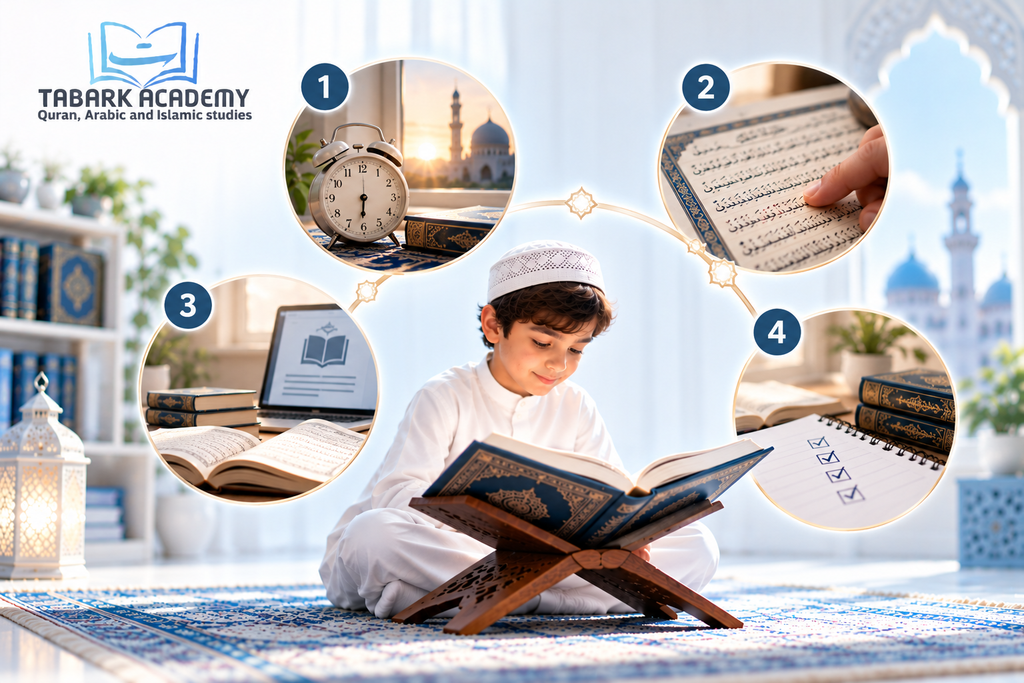
1. Set a Specific Daily Time
Choose a time when you are less likely to be interrupted. This could be after Fajr, after one of the daily prayers, or before sleeping.
Even 10–15 minutes of focused reading can help you establish a routine that you can maintain.
2. Read With Attention
Try to give the verses your full attention instead of treating recitation as something to complete as quickly as possible Focus on correct pronunciation and allow yourself time to pause and reflect.
3. Learn the Meaning
If Arabic is not your first language, use a reliable translation and study the meaning of the verses you recite.
Understanding the message can help connect your recitation with reflection and practical action.
4. Memorize Gradually
Start with an amount that you can realistically review. You might begin with a few verses or a short Surah and gradually increase your memorization Regular revision is essential for maintaining what you have memorized.
5. Improve Your Recitation
Correct pronunciation and Tajweed make you more confident and protect the meaning. Start with our Tajweed Course for Beginners.
A qualified teacher can identify mistakes that may be difficult to notice when studying completely on your own.
6. Apply What You Learn
Ask yourself how the lessons you read can influence your worship, relationships, decisions, and character.
The goal is not simply to increase the number of pages you read. It is to build a lasting relationship with the Quran.
Step Inside Our Virtual Classrooms
See our engaging teaching methods in action! watch real snippets of our live classes and discover how our expert instructors make learning interactive, memorable, and inspiring for every student.
Learn the Quran With a Qualified Teacher
Reading the Quran on your own has great value, but learning with a qualified teacher can help you identify pronunciation mistakes, improve your Tajweed, and build a consistent learning routine. This is especially important for beginners who may not yet be able to recognize whether they are pronouncing Arabic letters correctly or applying Tajweed rules accurately.
At Tabarak Academy, you can learn with a qualified teacher who works with you according to your current level and learning goals. Whether you want to improve your Quran reading, strengthen your recitation, memorize selected Surahs, or work toward full Hifz, personalized guidance can help you make steady progress and develop greater confidence in your Quran journey.
Try your first lesson for free and start your Quran learning journey today.
Our Quran Courses
- Online Quran Classes
- Online Quran Classes for Beginners
- Online Quran Classes for Kids
- Online Quran Classes for Adults
- Online Quran Classes for Men
- Online Quran Classes for Sisters
- Quran Reading Course
- Quran Recitation Course
- Online Ijazah Course
- Online Qirat Course
- Quran for Toddlers / Young Children
- Weekend Quran Classes
- Intensive Quran Course
- Al-Azhar Quran Course
- Zoom Quran Classes
- Noor Al-Bayan Course
Conclusion
The Holy Quran is more than a book to read; it is a source of guidance, mercy, and spiritual strength for every believer. Its virtues include the reward of recitation, the benefits of memorization, the peace it brings to the heart, and the guidance it provides in daily life.
By reading the Quran regularly, learning its meanings, memorizing its verses, and applying its teachings, you can build a stronger and more meaningful relationship with the Book of Allah. Even a small amount of consistent effort can become an important part of your daily life and faith.
Whether you are a beginner or already familiar with the Quran, there is always an opportunity to learn more and strengthen your connection with Allah through His Book. What matters most is to continue reading, reflecting, learning, and putting its teachings into practice in your daily life.
Frequently Asked Questions About the Virtues of the Holy Quran
What are the main virtues of the Holy Quran?
The main virtues of the Holy Quran include its role as guidance, mercy, spiritual healing, and a source of reward for recitation. The Sunnah also describes rewards associated with learning, teaching, and maintaining a relationship with the Quran.
What are the benefits of reading the Quran every day?
Reading the Quran every day can help you maintain a consistent connection with Allah, receive the reward of recitation, reflect on Quranic guidance, and make Quran learning part of your daily routine.
What are the benefits of memorizing Quran?
The benefits of memorizing Quran include strengthening your relationship with the Quran, developing a consistent revision routine, carrying Quranic passages with you, and being able to recite them in Salah and throughout your day.
What is the effect of Quran on the heart?
The Quran reminds believers of Allah, encourages repentance and patience, and provides guidance that can influence faith, attitudes, and behavior. Reflection upon its meanings can make this relationship deeper.
Does the Quran bring peace?
The Quran contains reminders that can provide spiritual reassurance and encourage believers to place their trust in Allah. Recitation can also provide dedicated time for worship and reflection.
Does memorizing Quran improve memory?
Memorizing Quran requires concentration, repeated recall, and regular revision. However, it should not be presented as a guaranteed treatment or scientifically proven solution for memory problems. Claims about cognitive effects should be supported by appropriate research.