


Easy Quran Surahs to Memorize – A Beginner’s Guide
Have you ever opened the Quran with real determination to memorize it, only to close it a few minutes later feeling overwhelmed? You are not alone, and the good news is that you do not need to start with the longest or hardest chapters.
Finding the easy Quran surahs to memorize first is the smartest way to build momentum, confidence, and a genuine love for the Quran. This article walks you through the surahs most students find easiest, the surahs backed by authentic hadith about their special virtue, and the surahs it is best to postpone until later.
An easy Quran surah to memorize is one with short verses, a repeated rhythmic pattern, and frequent exposure through the five daily prayers. These three qualities are exactly what make certain chapters ideal starting points for new memorizers (also called huffaz-in-training).
Book a free trial lesson Of Quran Courses

1. Surah Al-Ikhlas
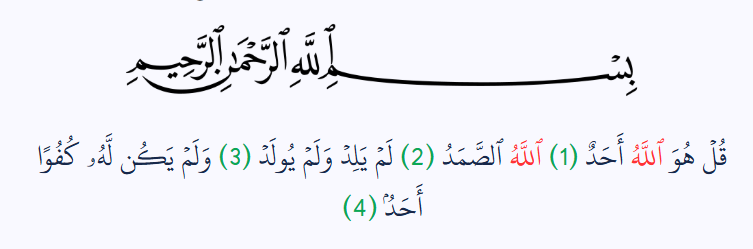
Surah Al-Ikhlas is only four short verses long, yet it summarizes the entire Islamic concept of Tawhid, the oneness of Allah, in the simplest possible words.
It is usually the very first surah a new memorizer learns, because its short, repeated sentence structure makes it easy to recall after only a few readings.
It is recited constantly in daily prayer, before sleep, and in the morning and evening remembrances (adhkar).
According to an authentic hadith recorded by Bukhari, the Prophet, peace be upon him, described reciting this surah as equal in reward to reciting one third of the entire Quran, which is one reason many teachers recommend memorizing it first.
قُلْ هُوَ اللَّهُ أَحَدٌ ﴿١﴾ اللَّهُ الصَّمَدُ ﴿٢﴾ لَمْ يَلِدْ وَلَمْ يُولَدْ ﴿٣﴾ وَلَمْ يَكُن لَّهُ كُفُوًا أَحَدٌ ﴿٤﴾
English meaning: “Say, He is Allah, [who is] One, Allah, the Eternal Refuge. He neither begets nor is born, nor is there to Him any equivalent.”
2. Surah Al-Kawthar
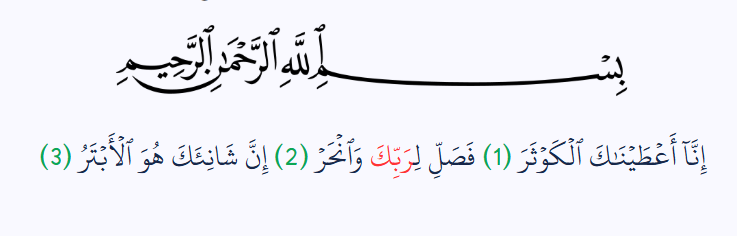
Surah Al-Kawthar is the shortest surah in the entire Quran, containing only three verses, which makes it the fastest surah for any beginner to complete from start to finish.
It was revealed to comfort the Prophet, peace be upon him, after some of his opponents mocked him for having no surviving sons, telling him that Allah had granted him al-Kawthar, an abundant good understood by most scholars to refer to a river in Paradise as well as abundant blessing in this life.
Because the surah is only a few words long and built around one clear message of reassurance, most learners memorize it correctly within a single sitting.
إِنَّا أَعْطَيْنَاكَ الْكَوْثَرَ ﴿١﴾ فَصَلِّ لِرَبِّكَ وَانْحَرْ ﴿٢﴾ إِنَّ شَانِئَكَ هُوَ الْأَبْتَرُ ﴿٣﴾
English meaning: “Indeed, We have granted you al-Kawthar. So pray to your Lord and sacrifice [to Him alone]. Indeed, your enemy is the one cut off.”
الشيخ الحصري – سورة الكوثر (مرتّل)
3. Surah Al-Falaq
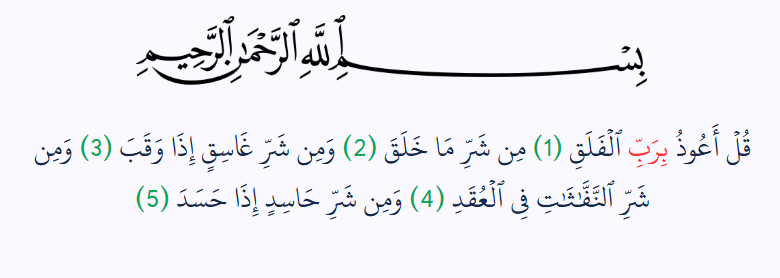
Surah Al-Falaq opens with the phrase “Say, I seek refuge,” the same opening used in Surah An-Nas, which is why the two surahs are traditionally taught and reviewed together.
In five short verses, it asks Allah for protection from four specific sources of harm: the evil of what He has created, the evil of darkness when it spreads, the evil of those who practice harmful sorcery, and the evil of an envious person.
Along with Surah An-Nas, it is known as one of the Mu’awwidhatayn (the two surahs of refuge) and is recited every morning and evening as part of the daily protective supplications, so most Muslims already hear it regularly before they ever try to memorize it.
قُلْ أَعُوذُ بِرَبِّ الْفَلَقِ ﴿١﴾ مِن شَرِّ مَا خَلَقَ ﴿٢﴾ وَمِن شَرِّ غَاسِقٍ إِذَا وَقَبَ ﴿٣﴾ وَمِن شَرِّ النَّفَّاثَاتِ فِي الْعُقَدِ ﴿٤﴾ وَمِن شَرِّ حَاسِدٍ إِذَا حَسَدَ ﴿٥﴾
English meaning: “Say, I seek refuge in the Lord of daybreak, from the evil of that which He created, and from the evil of darkness when it settles, and from the evil of the blowers in knots, and from the evil of an envier when he envies.”
4. Surah An-Nas
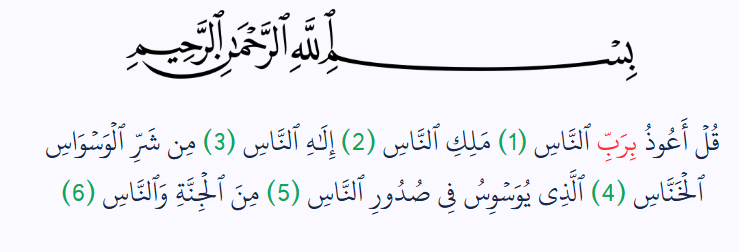
Surah An-Nas is the final surah of the Quran in mus’haf order, and it asks Allah for protection from the whispering of Shaytan, described here as one who withdraws when Allah is remembered but returns to whisper doubts and evil thoughts into people’s hearts.
Together with Surah Al-Falaq, it forms the Mu’awwidhatayn, recited constantly in the daily morning and evening supplications, which gives most learners a strong head start before formal memorization even begins.
Its six verses share the same repeated word “an-nas” (mankind), which creates a natural rhythm that makes the sequence easy to retain.
قُلْ أَعُوذُ بِرَبِّ النَّاسِ ﴿١﴾ مَلِكِ النَّاسِ ﴿٢﴾ إِلَٰهِ النَّاسِ ﴿٣﴾ مِن شَرِّ الْوَسْوَاسِ الْخَنَّاسِ ﴿٤﴾ الَّذِي يُوَسْوِسُ فِي صُدُورِ النَّاسِ ﴿٥﴾ مِنَ الْجِنَّةِ وَالنَّاسِ ﴿٦﴾
English meaning: “Say, I seek refuge in the Lord of mankind, the Sovereign of mankind, the God of mankind, from the evil of the retreating whisperer, who whispers [evil] into the breasts of mankind, from among the jinn and mankind.”
Tabarak Academy’s Short Surah Memorization Course teaches Muslim kids, adult beginners, and busy professionals to memorize short surahs from Juz ‘Amma with correct Tajweed, proper Makharij (letter pronunciation points), and confident recitation in daily Salah.
Book Your Free Trial Class to get matched with a certified teacher who checks your recitation from the very first lesson.
Experience Our Interactive Learning
Curious about how we teach? Watch these brief video clips from our recent live sessions to see our structured curriculum, advanced learning platform, and dynamic student-teacher interactions firsthand.
5. Surah Al-Asr
Surah Al-Asr is only three verses long, but it presents a complete argument about the human condition: Allah swears by time itself that mankind is in a state of loss, except for those who meet four conditions together believing, doing righteous deeds, encouraging one another toward truth, and encouraging one another toward patience.
Imam Al-Shafi’i famously said that if people reflected only on this surah, it would be sufficient guidance for them, which is one reason it is so often taught early to new students.
Its short length and clear logical structure, moving from a general statement to a specific exception, make it easy to memorize while also carrying a message worth reflecting on for a lifetime.
الشيخ الحصري – سورة العصر (مرتّل)
وَالْعَصْرِ ﴿١﴾ إِنَّ الْإِنسَانَ لَفِي خُسْرٍ ﴿٢﴾ إِلَّا الَّذِينَ آمَنُوا وَعَمِلُوا الصَّالِحَاتِ وَتَوَاصَوْا بِالْحَقِّ وَتَوَاصَوْا بِالصَّبْرِ ﴿٣﴾
English meaning: “By time, indeed mankind is in loss, except for those who have believed and done righteous deeds and advised each other to truth and advised each other to patience.”
6. Surah An-Nasr
Surah An-Nasr was revealed near the very end of the Prophet’s mission, and many scholars consider it a sign that his work of conveying the message was complete.
In just three verses, it describes people entering the religion of Allah in large numbers, and instructs the Prophet, peace be upon him, to glorify Allah with praise and seek His forgiveness once that victory arrives.
Because the surah is short and describes a single, clear historical moment, learners usually find it straightforward to memorize after hearing it once or twice.
إِذَا جَاءَ نَصْرُ اللَّهِ وَالْفَتْحُ ﴿١﴾ وَرَأَيْتَ النَّاسَ يَدْخُلُونَ فِي دِينِ اللَّهِ أَفْوَاجًا ﴿٢﴾ فَسَبِّحْ بِحَمْدِ رَبِّكَ وَاسْتَغْفِرْهُ إِنَّهُ كَانَ تَوَّابًا ﴿٣﴾
English meaning: “When the victory of Allah has come and the conquest, and you see the people entering into the religion of Allah in multitudes, then exalt [Him] with praise of your Lord and ask forgiveness of Him. Indeed, He is ever Accepting of repentance.”
Read also: Which Short Surahs Should You Memorize First?
7. Surah Ad-Duha
Surah Ad-Duha was revealed during a difficult period when the Prophet, peace be upon him, had not received revelation for some time and began to feel that Allah had left him.
وَالضُّحَىٰ ﴿١﴾ وَاللَّيْلِ إِذَا سَجَىٰ ﴿٢﴾ مَا وَدَّعَكَ رَبُّكَ وَمَا قَلَىٰ ﴿٣﴾ وَلَلْآخِرَةُ خَيْرٌ لَّكَ مِنَ الْأُولَىٰ ﴿٤﴾ وَلَسَوْفَ يُعْطِيكَ رَبُّكَ فَتَرْضَىٰ ﴿٥﴾ أَلَمْ يَجِدْكَ يَتِيمًا فَآوَىٰ ﴿٦﴾ وَوَجَدَكَ ضَالًّا فَهَدَىٰ ﴿٧﴾ وَوَجَدَكَ عَائِلًا فَأَغْنَىٰ ﴿٨﴾ فَأَمَّا الْيَتِيمَ فَلَا تَقْهَرْ ﴿٩﴾ وَأَمَّا السَّائِلَ فَلَا تَنْهَرْ ﴿١٠﴾ وَأَمَّا بِنِعْمَةِ رَبِّكَ فَحَدِّثْ ﴿١١﴾
By the morning brightness, and [by] the night when it covers with darkness, your Lord has not forsaken you, [O Muhammad], nor has He detested [you]. And the Hereafter is better for you than the first [life]. And your Lord is going to give you, and you will be satisfied. Did He not find you an orphan and give [you] refuge? And He found you lost and guided [you]. And He found you poor and made [you] self-sufficient. So as for the orphan, do not oppress [him]. And as for the petitioner, do not repel [him]. But as for the favor of your Lord, report [it]. ” Surah Ad-Duha 93:1-11 “
The surah opens with reassuring oaths and reminds him of Allah’s continuous care throughout his life, from being an orphan to being guided and provided for, before closing with instructions to treat orphans kindly, never turn away those who ask for help, and speak about Allah’s favor.
It is slightly longer than the surahs above, with eleven verses, but its gentle, comforting tone and clear structure of promise and instruction still make it very manageable for a beginner.
Read also: Which Quran Surahs Should Beginners Memorize First?
8. Surah Ash-Sharh
Surah Ash-Sharh continues directly from the themes of Ad-Duha, opening by asking whether Allah has not expanded the Prophet’s chest and removed the burden that weighed on him.
أَلَمْ نَشْرَحْ لَكَ صَدْرَكَ ﴿١﴾ وَوَضَعْنَا عَنكَ وِزْرَكَ ﴿٢﴾ الَّذِي أَنقَضَ ظَهْرَكَ ﴿٣﴾ وَرَفَعْنَا لَكَ ذِكْرَكَ ﴿٤﴾ فَإِنَّ مَعَ الْعُسْرِ يُسْرًا ﴿٥﴾ إِنَّ مَعَ الْعُسْرِ يُسْرًا ﴿٦﴾ فَإِذَا فَرَغْتَ فَانصَبْ ﴿٧﴾ وَإِلَىٰ رَبِّكَ فَارْغَب ﴿٨﴾
Did We not expand for you, [O Muhammad], your breast? And We removed from you your burden, which had weighed upon your back, and raised high for you your repute. For indeed, with hardship [will be] ease. Indeed, with hardship [will be] ease. So when you have finished [your duties], then stand up [for worship]. And to your Lord direct [your] longing. ” Surah Ash-Sharh 94:1-8 “
Its most memorable feature is a phrase repeated twice for emphasis, that with hardship comes ease, a message many scholars point to as one of the most reassuring lines in the entire Quran.
With only eight verses and a rhythmic, repetitive style, it is commonly memorized in the same sitting as Ad-Duha, since the two are often treated as a connected pair.
9. Surah Al-Baqarah
Surah Al-Baqarah is the longest surah in the Quran, which makes many beginners avoid it, yet it is far more approachable than it first appears.
It contains Ayat al-Kursi, one of the most frequently recited and taught verses in the entire Quran, as well as its own closing two verses, which the Prophet, peace be upon him, described as sufficient protection for whoever recites them at night.
The surah also tells the story of Prophet Musa, peace be upon him, and the Children of Israel, and lays out well-known rulings on fasting, Hajj, charity, and debt that most practicing Muslims already encounter regularly, which gives new memorizers a surprising amount of familiar ground to build on.
الشيخ المنشاوي – سورة البقرة (مُرتَّل)
10. Surah Aal-Imran
Surah Aal-Imran is frequently recited aloud in congregational prayer, so many of its verses become familiar simply through regular attendance at the mosque.
It addresses questions and objections raised by the People of the Book about Islam, and narrates the events of the Battle of Uhud in detail, drawing lessons about patience, obedience, and trust in Allah during hardship.
According to hadith, Surah Al-Baqarah and Surah Aal-Imran will appear on the Day of Judgment to intercede on behalf of those who memorized and acted upon them, which is one reason many students choose to memorize both surahs together.
الشيخ المنشاوي – سورة آل عمران – تلاوة مُرتَّلة
11. Surah Yusuf
Surah Yusuf is often called “the best of stories” because it tells one complete, uninterrupted narrative about Prophet Yusuf, peace be upon him, from his childhood dream through his brothers’ betrayal, his years in Egypt, and his eventual reunion with his family.
Because the entire surah follows a single storyline in chronological order, learners can use the sequence of events itself as a memory anchor, recalling what happens next in the story rather than memorizing disconnected verses.
Its themes of patience, forgiveness, and trust in Allah’s plan also make it one of the more emotionally engaging surahs to learn.
Read also: Best Surahs to Memorize for Your Daily Salah
12. Surah Al-Kahf
Surah Al-Kahf contains four separate stories: the people of the cave who slept for years to protect their faith, a man with two gardens who forgot to credit his blessings to Allah, the journey of Prophet Musa, peace be upon him, with a righteous servant of Allah known as Al-Khidr, and the travels of the powerful ruler Dhul-Qarnayn.
Together, these stories address four major trials that can test a person’s faith: the trial of religion, wealth, knowledge, and power.
Reciting it on Friday is described in an authentic hadith as a source of light and forgiveness, and many scholars also mention it as a protection against the trial of the Dajjal (the false messiah), which is why it is memorized and reviewed weekly by many practicing Muslims.
مَنْ قَرَأَ سُورَةَ الْكَهْفِ يَوْمَ الْجُمُعَةِ، سَطَعَ لَهُ نُورٌ مِنْ تَحْتِ قَدَمِهِ إِلَى عَنَانِ السَّمَاءِ يُضِيءُ بِهِ يَوْمَ الْقِيَامَةِ، وَغُفِرَ لَهُ مَا بَيْنَ الْجُمُعَتَيْنِ
English meaning: The Prophet (peace be upon him) said, “Whoever recites Surah Al-Kahf on Friday, a light will shine for him from beneath his feet to the clouds of the sky, and it will illuminate him on the Day of Resurrection, and he will be forgiven for the sins between the two Fridays.”
Narrated by Abu Sa’id al-Khudri; recorded by al-Hakim (graded authentic), al-Bayhaqi, and al-Darimi.
Free Tajweed Courses at Tabarak Academy cater to learners of every age and skill level, from complete beginners who are still learning the Arabic letters to advanced students refining the finer rules of Tajweed, so you can memorize surahs like Al-Kahf with accurate pronunciation from the start.

13. Surah Al-Mulk
Surah Al-Mulk opens by describing Allah’s complete ownership and control over all creation, then moves through reflections on the heavens, the punishment awaiting disbelievers, and Allah’s power to provide and to take away.
It is described in an authentic hadith as a surah of thirty verses that will intercede for the person who recites it regularly until they are forgiven, which is why many Muslims make a habit of reciting it every night before sleeping.
Its consistent, flowing style and recurring reminders about Allah’s power make its thirty verses more approachable than their length might initially suggest.
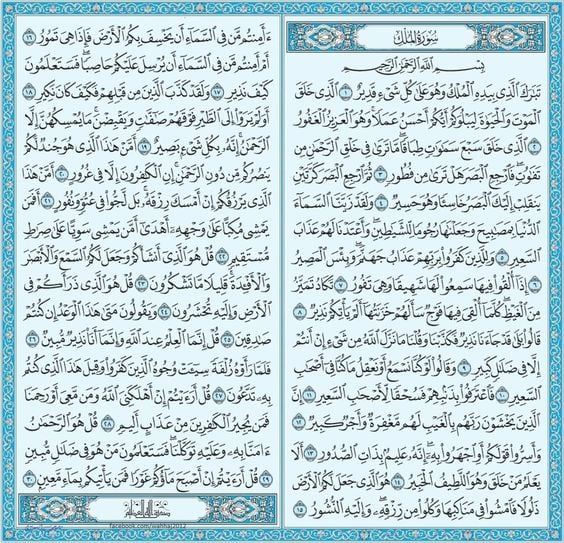
إِنَّ سُورَةً مِنَ الْقُرْآنِ ثَلاَثُونَ آيَةً شَفَعَتْ لِرَجُلٍ حَتَّى غُفِرَ لَهُ، وَهِيَ سُورَةُ تَبَارَكَ الَّذِي بِيَدِهِ الْمُلْكُ
English meaning: The Prophet (peace be upon him) said, “There is a surah in the Quran of thirty verses which will intercede for a man until he is forgiven, and it is Surah [Tabarak, the one] in whose Hand is the dominion (Al-Mulk).”
Narrated by Abu Hurairah; recorded by al-Tirmidhi (graded good), Abu Dawud, Ahmad, Ibn Majah, and al-Hakim (graded authentic).
14. Surah As-Sajdah
Surah As-Sajdah discusses the creation of the heavens and the earth, the stages of human creation, and the reality of resurrection, and it contains a verse of prostration (sajdah) that Muslims physically bow down for when reciting or hearing it.
According to hadith recorded by both Bukhari and Muslim, the Prophet, peace be upon him, regularly recited this surah in the Friday Fajr prayer alongside Surah Al-Insan, which means many worshippers who attend the mosque regularly on Fridays have already heard large parts of it recited aloud.
15. Surah Al-Insan
Surah Al-Insan, also known as Surah Ad-Dahr, describes the stages of a human being’s creation and then paints a detailed picture of the rewards awaiting the righteous in Paradise, including its food, drink, clothing, and comfort.
As mentioned above, it was recited together with Surah As-Sajdah in the Friday Fajr prayer according to hadith recorded by Bukhari and Muslim, which is why both surahs gradually become familiar to anyone who attends Friday prayer consistently over time.
16. Surah Al-Jumu’ah
Surah Al-Jumu’ah takes its name from the Friday prayer itself and addresses believers directly, instructing them to hasten to the remembrance of Allah and leave off trade once the call to Friday prayer is made.
According to a hadith recorded by Muslim, the Prophet, peace be upon him, used to recite this surah during the Friday prayer alongside Surah Al-Munafiqun, so its verses about gathering for Friday prayer are reinforced weekly for anyone who attends.
17. Surah Al-Munafiqun
Surah Al-Munafiqun describes the behavior and inner qualities of hypocrites, including how their words can sound convincing while their hearts hold the opposite of what they say, and it warns believers against letting wealth and children distract them from remembering Allah.
Because it was recited together with Surah Al-Jumu’ah in the Friday prayer, as recorded by Muslim, many Muslims already recognize large portions of this surah from years of attending Friday prayer, even before they set out to memorize it formally.
18. Surah Qaf
Surah Qaf focuses heavily on the reality of resurrection and the Day of Judgment, responding to the disbelievers’ surprise that a person could be brought back to life after turning to dust.
A remarkable hadith recorded by Muslim mentions that a woman named Umm Hisham bint Harithah memorized this entire surah only from hearing the Prophet, peace be upon him, recite it every single Friday from the pulpit during his sermons, without ever formally sitting down to memorize it.
الشيخ المنشاوي – سورة ق (مُرتَّل)
Her experience is a clear, practical example of how regular listening alone can lead to memorization, even of a surah as content-rich as this one.
Once you have worked through the surahs above, a few chapters are best postponed until you have more experience: Surah Yunus, Surah Fatir, Juz 28, Surah An-Nisa, Surah An-Nahl, Surah Al-Ankabut, and Surah Az-Zumar.
These contain longer verses, denser legal content, and less repetition from daily prayer, which makes them more demanding for a beginner to take on early.
Book Your Free Trial Class
Ready to memorize the surahs above with a certified teacher guiding every step? Book Your Free Trial Class with Tabarak Academy today and get matched with an instructor suited to your age, level, and schedule, wherever in the world you are learning from.a
How to Build a Simple Quran Memorization Plan
A workable plan does not need to be complicated. Choose one easy surah at a time, listen to a qualified reciter repeatedly before you try to recall it yourself, and review what you have already memorized daily so it does not fade.
Consistency matters more than speed, and having a teacher check your recitation regularly prevents small mistakes from becoming habits.
This is one of the main reasons students join structured programs like Tabarak Academy, where a certified instructor listens to your recitation and corrects it in real time.
Watch a real life at our academy:
Innovative Quran Memorization Method

Step Inside Our Virtual Classrooms
See our engaging teaching methods in action! watch real snippets of our live classes and discover how our expert instructors make learning interactive, memorable, and inspiring for every student.
Book Your Free Trial Class
Ready to start memorizing the easy Quran surahs above with a certified teacher guiding every step? Book Your Free Trial Class with Tabarak Academy today and get matched with an instructor suited to your age, level, and schedule, wherever in the world you are learning from.
Our Quran Memorization / Hifz Courses
- Online Hifz Program
- Juz 30 Memorization Course
- Hifz for Kids Course
- Hifz for Adults Course
- Hifz for Sisters Course
- Short Surah Memorization Course
- Hifz Ijazah Course

Final Thoughts on Easy Quran Surahs to Memorize
Choosing the right easy Quran surahs to memorize first, rather than starting from the beginning of the mus’haf, makes the entire memorization journey more encouraging and sustainable. Short surahs from Juz ‘Amma, prayer-familiar chapters, and story-driven surahs like Yusuf all give you an early sense of progress.
Surahs with authentic virtue, such as Al-Kahf, Al-Mulk, As-Sajdah, Al-Insan, Al-Jumu’ah, Al-Munafiqun, and Qaf, add extra motivation while you build your habit.
Save the denser surahs, like An-Nisa or Az-Zumar, for once you have more experience, and consider guided lessons to keep your Tajweed and pacing accurate throughout.

Frequently Asked Questions
What is the easiest surah in the Quran to memorize?
Surah Al-Ikhlas and Surah Al-Kawthar are generally considered the easiest surahs to memorize because they are extremely short, only four and three verses respectively, and are recited often in daily prayer.
What is the shortest surah in the Quran?
Surah Al-Kawthar (Chapter 108) is the shortest surah in the Quran, consisting of only three verses, and it is one of the first surahs many beginners memorize.
How long does it take to memorize a short surah?
A short surah like Al-Ikhlas, Al-Falaq, or An-Nas can often be memorized within one or two focused sessions, since each contains only three to five brief verses with a repeated rhythmic pattern.
Should I memorize the Quran in the order it appears in the mus’haf?
No, memorizing in mus’haf order is not required, and starting with the easy Quran surahs to memorize first, such as those in Juz ‘Amma, often builds confidence faster than starting from Surah Al-Baqarah.
Can adults with no Arabic background memorize the Quran?
Yes, adults without an Arabic background can memorize the Quran successfully, especially with a structured plan, consistent repetition, and a qualified teacher who corrects pronunciation as they go.
Is the reported virtue of Surah Al-Waqiah authentic?
No, the widely circulated hadith describing special virtue for Surah Al-Waqiah are classified by hadith scholars as very weak or fabricated, even though they remain popular among the public.