

Most Frequent Words In The Quran List- Top Repeated Words
Have you ever wondered which words appear most often in the Holy Quran? The Most Frequent Words In The Quran List highlights common words such as Allah, Rabb (Lord), Yawm (day), and the names of prophets, along with their repetition counts.
Counting Quranic words is useful for Muslims, students, and children learning the Quran. This article uses a scholarly word-by-word database to provide reliable counts and explains why totals may differ between sources.
At Tabarak Academy, students learn these words while developing their reading, Tajweed, and memorization skills.
1. Allah (الله) – About 2,699 Times
Allah (الله) is the proper name of God in Islam, and it is the most frequently repeated word in the Quran after small connecting words, appearing about 2,699 times. The name Allah is also found in the Basmala, which opens every surah of the Quran except Surah At-Tawbah.
بِسۡمِ ٱللَّهِ ٱلرَّحۡمَٰنِ ٱلرَّحِيمِ
“In the name of Allah, the Entirely Merciful, the Especially Merciful.”
Because the name Allah appears so often, it is usually one of the first words children recognize when they start reading. Students in the Noorani Qaida course for beginners learn the letters Alif, Lam, and Ha that form this blessed name.
2. Rabb (رب) – Lord – About 975 Times
Rabb (رب) means Lord, Sustainer, and Caretaker. It appears approximately 975 times in the Quran, in different forms such as Rabbuka (your Lord), Rabbana (our Lord), and Rabbi (my Lord).
These forms reflect the relationship between Allah and His creation, reminding believers that He is the One who creates, provides, protects, and guides them.
Many Quranic duas begin with “Rabbana,” teaching Muslims to turn to Allah with their needs, hopes, and concerns. For example, believers ask Him for forgiveness, mercy, guidance, and goodness in this life and the Hereafter.
Recognizing the word Rabb in different Quranic verses helps readers understand Allah’s attributes and appreciate the meaning of the supplications they recite in their daily prayers.
3. Yawm (يوم) – Day – About 475 Times
Yawm (يوم) means day. Counting all its forms, including “days” and “two days”, the word appears about 475 times in the Quran. It often refers to the Day of Judgment, called Yawm al-Qiyamah (the Day of Resurrection) or Yawm ad-Din (the Day of Recompense).
These references remind believers of the temporary nature of worldly life and the importance of preparing for the Hereafter through faith and good deeds.
A popular claim says the word “day” appears exactly 365 times, matching the days of the year. This number only works when certain forms are selected and others are left out. It is better shared as an interesting observation from some authors, not as a proven fact about the Quran.
4. Ard (أرض) – Earth – About 461 Times
Ard (أرض) means earth or land. It appears about 461 times in the Quran and is often paired with the heavens in the phrase “as-samawat wal-ard” (the heavens and the earth).
This expression highlights the vastness of Allah’s creation and the connection between the world people live in and the universe above them. Many verses describe the earth as a place filled with signs of Allah’s power, such as mountains, rivers, plants, and different forms of life.
Reflecting on these signs encourages believers to appreciate Allah’s blessings, recognize His wisdom, and remember their responsibility to care for the world around them.

5. Rasul (رسول) – Messenger – About 332 Times
Rasul (رسول) means messenger: a person chosen by Allah to deliver His message to people. Including its plural, rusul, the word appears about 332 times in the Quran.
These references explain how Allah sent messengers to guide humanity, teach people about His oneness, and show them the difference between right and wrong.
The Quran also tells the stories of different messengers, including Nuh, Ibrahim, Musa, and Isa (peace be upon them), highlighting their patience and dedication despite the challenges they faced.
Prophet Muhammad ﷺ is the final messenger, and his teachings provide guidance for Muslims in their beliefs, worship, and daily lives.
Experience Our Interactive Learning
Curious about how we teach? Watch these brief video clips from our recent live sessions to see our structured curriculum, advanced learning platform, and dynamic student-teacher interactions firsthand.
Start Your Quran Learning Journey
Join Tabark Academy today for structured online lessons with qualified tutors, customized to fit your goals.
Book Your Free Trial Lesson6. Sama’ (سماء) – Sky or Heaven – About 310 Times
Sama’ (سماء) means sky or heaven, and its plural, samawat, means the heavens. Together, these forms appear about 310 times in the Quran.
The sky is mentioned in many verses that invite people to reflect on the beauty and order of Allah’s creation. References to rain, clouds, stars, the sun, and the moon remind readers of the signs of His power and perfect design.
By reflecting on these natural signs, believers can strengthen their faith, develop gratitude for Allah’s blessings, and recognize that the universe operates according to His wisdom and command.
Help Your Child Love the Words of the Quran, Explore the Kids Quran Course
7. Kitab (كتاب) – Book – About 260 Times
Kitab (كتاب) means book or written record. It appears about 260 times in the Quran and has several meanings depending on the context. It can refer to the Quran itself, earlier revealed scriptures such as the Torah and the Gospel, or a person’s record of deeds that will be presented on the Day of Judgment.
The phrase Ahl al-Kitab (People of the Book) refers to Jews and Christians, who received scriptures before the revelation of the Quran.
Studying the different uses of this word helps readers understand how the Quran discusses divine revelation, religious guidance, and accountability for one’s actions.
Read also: Hifz Academies In Egypt- 10 Trusted Options For Kids And Adults
8. An-Nas (الناس) – People – About 241 Times
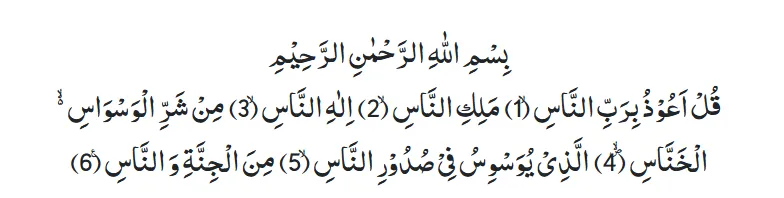
An-Nas (الناس) means people or mankind. It appears about 241 times in the Quran, and the last surah in the order of the Mushaf is named Surah An-Nas.
Many verses address all of humanity with the call “Ya ayyuha an-nas” (O mankind), showing that the Quran’s message is for everyone, regardless of nationality, language, or background.
These verses discuss important aspects of human life, including worshipping Allah, following His guidance, recognizing His blessings, and preparing for the Hereafter. The repeated use of this word reminds readers that Quranic teachings offer guidance for individuals and communities alike.
9. Jannah (جنة) – Garden or Paradise – About 147 Times
Jannah (جنة) means garden, and in Islamic belief, it also refers to Paradise, the eternal reward for the believers. Counting singular, dual, and plural forms (jannatan and jannat), the word appears about 147 times.
A few of these uses describe earthly gardens, such as the two gardens in Surah Al-Kahf, while many others refer to the everlasting gardens promised to the righteous.
Quranic descriptions of Jannah mention flowing rivers, beautiful surroundings, peace, and blessings beyond human imagination. These descriptions encourage believers to strengthen their faith, perform good deeds, and seek Allah’s mercy and pleasure.
10. An-Nar (النار) – Fire – About 145 Times
An-Nar (النار) means fire, and in most Quranic verses, it refers to the Hellfire. It appears about 145 times in the Quran. These references warn people about the consequences of disbelief, injustice, and disobedience, while reminding them of the importance of repentance and righteous actions.
The Quran also contrasts the punishment of the Fire with the rewards of Paradise, encouraging believers to choose the path of faith and obedience.
Some popular lists give a lower number because they count only certain forms of the word, which is a good example of why Quran word counts can differ between sources.
11. Musa (موسى) – Prophet Moses – About 136 Times
Musa (موسى), known in English as Moses, is the prophet mentioned by name most often in the Quran, appearing about 136 times.
His story is told across many surahs, including his confrontation with Pharaoh, his mission to guide the Children of Israel, and his journey with the righteous servant in Surah Al-Kahf.
These accounts highlight important lessons about patience, courage, obedience, and trust in Allah, especially when facing difficult situations. The Quran also describes how Allah supported Musa with miracles and guided him through major challenges.

12. Ad-Dunya and Al-Akhirah (الدنيا والآخرة) – 115 Times Each
Ad-Dunya (الدنيا) means the worldly life, while Al-Akhirah (الآخرة) means the Hereafter. Each word appears 115 times in the Quran, a balance many readers find striking.
Throughout the Quran, Allah reminds believers that worldly life is temporary and should not distract them from preparing for the eternal life to come.
This does not mean neglecting worldly responsibilities, but rather maintaining a balance between daily life, worship, and good deeds. One verse that mentions both words is:
يَعۡلَمُونَ ظَٰهِرًا مِّنَ ٱلۡحَيَوٰةِ ٱلدُّنۡيَا وَهُمۡ عَنِ ٱلۡأٓخِرَةِ هُمۡ غَٰفِلُونَ
“They know what is apparent of the worldly life, but they, of the Hereafter, are unaware.”
13. Malak and Shaytan (ملك وشيطان) – 88 Times Each
Malak (ملك) means angel, and Shaytan (شيطان) means devil. When singular and plural forms (mala’ikah and shayatin) are counted together, each word appears 88 times.
Angels are honoured servants of Allah who carry out His commands, deliver revelation, and record people’s deeds. In contrast, Shaytan is an enemy of humanity who tries to lead people away from the right path through temptation and whispers.
The Quran teaches believers to recognize this difference, remain mindful of their actions, and seek refuge in Allah from Shaytan. These references also remind Muslims that faith involves striving to obey Allah and resist harmful influences.
The Juz 30 memorization course helps young learners memorize short surahs with correct pronunciation and steady revision.

14. Jahannam (جهنم) – Hell – 77 Times
Jahannam (جهنم) is the Arabic name for Hell. It appears 77 times in the Quran, usually in verses that warn people about the consequences of disbelief and wrongdoing. These descriptions remind readers that every person is accountable for their choices and actions.
However, the Quran’s warnings are also accompanied by reminders of Allah’s mercy, forgiveness, and acceptance of sincere repentance.
The mention of Jahannam encourages believers to avoid sins, seek forgiveness, perform righteous deeds, and remain hopeful in Allah’s mercy throughout their lives.
15. Fir’awn (فرعون) – Pharaoh – 74 Times
Fir’awn (فرعون), or Pharaoh, is mentioned 74 times in the Quran. He is presented as a clear example of arrogance, tyranny, and oppression because he rejected Allah’s signs and treated the Children of Israel unjustly.
His story is closely linked to Prophet Musa (Moses), who was sent to call him to worship Allah and free the Children of Israel from his oppression. Their encounters appear in several surahs and describe Pharaoh’s pride, the miracles given to Musa, and the eventual destruction of Pharaoh and his army.
These accounts teach important lessons about humility, justice, patience, and the consequences of arrogance, reminding readers that power and wealth cannot protect anyone from Allah’s judgment.
16. Al-Quran (القرآن) – 70 Times
The word Quran (قرآن) appears 70 times inside the Quran itself, in forms such as al-Quran and Qur’anan. It comes from the Arabic root qara’a, meaning to read or recite. This shows that the Quran is a book meant to be recited aloud, understood, and acted upon.
وَلَقَدۡ يَسَّرۡنَا ٱلۡقُرۡءَانَ لِلذِّكۡرِ فَهَلۡ مِن مُّدَّكِرٍ
“And We have certainly made the Qur’an easy for remembrance, so is there any who will remember.”
Reciting the Quran correctly becomes much easier when a learner studies pronunciation rules from the very beginning. The Qaida with Tajweed course teaches the letters and their correct sounds so that every frequently repeated word is read accurately.

17. Ibrahim (إبراهيم) – Prophet Abraham – 69 Times
Ibrahim (إبراهيم), or Abraham, is mentioned 69 times in the Quran, and Surah Ibrahim carries his name. The Quran describes him as Khalil Allah, the close friend of Allah, highlighting his special status and strong faith.
His story appears in several surahs and includes his efforts to guide his father and people away from idol worship toward belief in one God. Ibrahim is also remembered for his willingness to sacrifice his son in obedience to Allah, his patience during difficult trials, and his role in building the Kaaba with his son Ismail.
Students who prefer a gentler pace alongside school or work can follow a plan to memorize the Quran in two years, with smaller daily portions and more time for review.
18. Nuh (نوح) – Prophet Noah – 43 Times
Nuh (نوح), or Noah, is mentioned 43 times in the Quran, and Surah Nuh is named after him. The Quran describes how he called his people to worship Allah alone and abandon idol worship for many years, despite their repeated rejection and mockery.
He continued delivering Allah’s message with patience and dedication, both publicly and privately. When his people refused to believe, Allah commanded him to build the Ark, where the believers and pairs of animals were saved from the great flood.
His story teaches Muslims the importance of patience, perseverance, trust in Allah, and remaining committed to the truth even when facing opposition.
Read also: Recite the Quran with emotion without over-singing
Step Inside Our Virtual Classrooms
See our engaging teaching methods in action! watch real snippets of our live classes and discover how our expert instructors make learning interactive, memorable, and inspiring for every student.
Start Your Quran Learning Journey
Join Tabark Academy today for structured online lessons with qualified tutors, customized to fit your goals.
Book Your Free Trial Lesson19. Adam and Isa (آدم وعيسى) – 25 Times Each
Adam (آدم), the first human and the first prophet, and Isa (عيسى), known in English as Jesus, are each mentioned by name 25 times in the Quran. Their stories highlight different signs of Allah’s power and wisdom.
Adam was created by Allah without a father or mother, while Isa was born miraculously to Maryam (Mary) without a father. Isa is also called Al-Masih (the Messiah) and Ibn Maryam (son of Mary), so he is referred to more often than his name alone suggests.
The Quran teaches that both Adam and Isa were honoured servants and prophets of Allah, while emphasizing that Isa was not divine but a messenger sent to guide the Children of Israel. Their stories help readers reflect on Allah’s ability to create and His guidance through the prophets.
20. Muhammad (محمد) ﷺ – 4 Times
The name Muhammad (محمد) appears 4 times in the Quran: in Surah Aal-Imran (3:144), Surah Al-Ahzab (33:40), Surah Muhammad (47:2), and Surah Al-Fath (48:29).
These verses mention Prophet Muhammad ﷺ in different contexts, including the reminder that he is Allah’s Messenger, the confirmation of his prophethood, and his role in delivering the final divine message.
The name Ahmad (أحمد) appears once, in Surah As-Saff (61:6), where Prophet Isa (Jesus, peace be upon him) gives glad tidings of a messenger who will come after him, named Ahmad.
وَمَا مُحَمَّدٌ إِلَّا رَسُولٌ قَدۡ خَلَتۡ مِن قَبۡلِهِ ٱلرُّسُلُۚ أَفَإِيْن مَّاتَ أَوۡ قُتِلَ ٱنقَلَبۡتُمۡ عَلَىٰٓ أَعۡقَٰبِكُمۡۚ وَمَن يَنقَلِبۡ عَلَىٰ عَقِبَيۡهِ فَلَن يَضُرَّ ٱللَّهَ شَيۡـًٔاۚ وَسَيَجۡزِي ٱللَّهُ ٱلشَّٰكِرِينَ
“Muhammad is not but a messenger. [Other] messengers have passed on before him. So if he was to die or be killed, would you turn back on your heels [to unbelief]? And he who turns back on his heels will never harm Allah at all; but Allah will reward the grateful.”
21. Ramadan (رمضان) – Once
Ramadan (رمضان) is mentioned by name only once in the whole Quran, in Surah Al-Baqarah (2:185). This verse tells us that the Quran was revealed in the month of Ramadan as guidance for humanity, with clear signs of guidance and the criterion between right and wrong.
It also establishes fasting as an obligation for Muslims who witness the month and are able to fast, while allowing specific concessions for those who are ill or traveling.
شَهۡرُ رَمَضَانَ ٱلَّذِيٓ أُنزِلَ فِيهِ ٱلۡقُرۡءَانُ هُدًى لِّلنَّاسِ وَبَيِّنَٰتٍ مِّنَ ٱلۡهُدَىٰ وَٱلۡفُرۡقَانِۚ فَمَن شَهِدَ مِنكُمُ ٱلشَّهۡرَ فَلۡيَصُمۡهُۖ وَمَن كَانَ مَرِيضًا أَوۡ عَلَىٰ سَفَرٍ فَعِدَّةٌ مِّنۡ أَيَّامٍ أُخَرَۗ يُرِيدُ ٱللَّهُ بِكُمُ ٱلۡيُسۡرَ وَلَا يُرِيدُ بِكُمُ ٱلۡعُسۡرَ وَلِتُكۡمِلُواْ ٱلۡعِدَّةَ وَلِتُكَبِّرُواْ ٱللَّهَ عَلَىٰ مَا هَدَىٰكُمۡ وَلَعَلَّكُمۡ تَشۡكُرُونَ
“The month of Ramadhan [is that] in which was revealed the Qur’an, a guidance for the people and clear proofs of guidance and criterion. So whoever sights [the new moon of] the month, let him fast it; and whoever is ill or on a journey – then an equal number of other days. Allah intends for you ease and does not intend for you hardship and [wants] for you to complete the period and to glorify Allah for that [to] which He has guided you; and perhaps you will be grateful.”
Words Repeated Back-to-Back in the Quran
Besides overall frequency, the Quran sometimes places the same word twice in a row. Scholars of balagha (Arabic eloquence) explain that this kind of repetition, called takrar, can add emphasis, strengthen a warning, or paint a vivid picture in the listener’s mind.
Not every pair is repetition for emphasis. In Surah Al-An’am (6:124), for example, the first “Allah” ends one sentence (“the messengers of Allah”) and the second begins a new one (“Allah knows best”). The table below lists well-known examples with their exact Surah references.
| Repeated words | English meaning | Location |
|---|---|---|
| رُسُلُ اللَّهِ ۘ اللَّهُ أَعْلَمُ | “the messengers of Allah. Allah is most knowing” | Surah Al-An’am (6:124) |
| فِيهِ ۚ فِيهِ رِجَالٌ | “to stand in. Within it are men” | Surah At-Tawbah (9:108) |
| إِنْ أَحْسَنتُمْ أَحْسَنتُمْ | “If you do good, you do good” | Surah Al-Isra (17:7) |
| هَيْهَاتَ هَيْهَاتَ | “How far, how far” | Surah Al-Mu’minun (23:36) |
| بَطَشْتُم بَطَشْتُمْ | “when you strike, you strike” | Surah Ash-Shu’ara (26:130) |
| لَا يَعْلَمُونَ ﴿٦﴾ يَعْلَمُونَ | “do not know. They know” | Surah Ar-Rum (30:6-7) |
| سَيِّئَةٍ سَيِّئَةٌ | “an evil act is an evil one like it” | Surah Ash-Shura (42:40) |
| السَّابِقُونَ السَّابِقُونَ | “the forerunners, the forerunners” | Surah Al-Waqi’ah (56:10) |
| سَلَامًا سَلَامًا | “Peace, peace” | Surah Al-Waqi’ah (56:26) |
| قَوَارِيرَا ﴿١٥﴾ قَوَارِيرَا | “clear as glass. Clear glasses” | Surah Al-Insan (76:15-16) |
| دَكًّا دَكًّا | “pounded and crushed” | Surah Al-Fajr (89:21) |
| صَفًّا صَفًّا | “rank upon rank” | Surah Al-Fajr (89:22) |
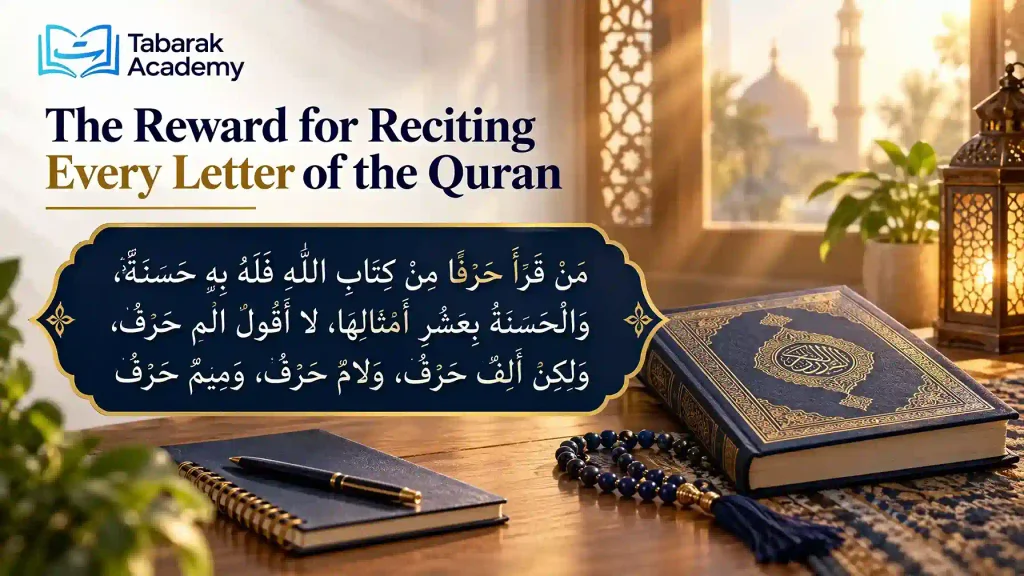
The Reward for Reciting Every Letter of the Quran
Counting Quranic words is a helpful study, but the greater goal is to recite and live by the Quran. Prophet Muhammad ﷺ taught that every single letter recited from the Book of Allah brings a reward, which means every repeated word is a new opportunity for good deeds.
«مَنْ قَرَأَ حَرْفًا مِنْ كِتَابِ اللَّهِ فَلَهُ بِهِ حَسَنَةٌ، وَالْحَسَنَةُ بِعَشْرِ أَمْثَالِهَا، لَا أَقُولُ الم حَرْفٌ، وَلَكِنْ أَلِفٌ حَرْفٌ، وَلَامٌ حَرْفٌ، وَمِيمٌ حَرْفٌ»
“Whoever recites a letter from Allah’s Book, then he receives the reward from it, and the reward of ten the like of it. I do not say that Alif Lam Mim is a letter, but Alif is a letter, Lam is a letter and Mim is a letter.”
This hadith means that even short, frequently repeated words carry great reward. The name Allah alone, made of several letters and repeated about 2,699 times, shows how much reward a Muslim can gain by completing the recitation of the Quran.
How Kids and Beginners Can Use This List to Learn the Quran
A most frequent words in Quran list is a practical learning tool for anyone who wants to improve their Quran reading and understanding. When learners become familiar with words that appear hundreds of times, they can recognize many terms across different surahs and understand more of what they read.
This gradually makes Quranic vocabulary easier to remember, reduces the need to look up every unfamiliar word, and builds confidence with regular practice.
Over time, recognizing repeated words can also help learners follow verse meanings and appreciate the Quran more deeply.
1. Start With the Most Repeated Words
Beginners can start by learning the top ten most frequent Quranic words: Allah, Rabb, Yawm, Ard, Rasul, Sama’, Kitab, An-Nas, Jannah, and An-Nar.
Understanding the meanings of these words helps learners recognize familiar vocabulary across different surahs and follow the general message of many verses, even before studying full Arabic grammar.
2. Turn the List Into a Word-Hunt Game for Kids
Children enjoy activities that involve searching, discovering, and playing. Parents can choose one Quranic word, such as Rabb or Musa, and ask their child to spot it while reading a short surah.
They can also write familiar words on small cards, show the Arabic word, and encourage children to find it in a Quran page. Each time a child recognizes the word correctly, parents can offer praise or a small reward to keep them motivated.
3. Connect Word Learning to Your Memorization Goal
Recognizing repeated words also makes memorizing the Quran easier, because many phrases return across different surahs. The right timeline depends on your age, schedule, and current level.
Learners with plenty of daily time and strong commitment can read about how to memorize the Quran in six months, which explains the daily workload and revision routine such a plan requires.
For a balanced but focused schedule, the guide on how to memorize the Quran in one year shows how to divide the pages and keep earlier portions strong.
Start Your Quran Learning Journey
Join Tabark Academy today for structured online lessons with qualified tutors, customized to fit your goals.
Book Your Free Trial LessonLearn to Read and Understand the Quran With Tabarak Academy
Knowing the most repeated words is a great first step, but real progress comes from reading the Quran correctly every day.
Tabarak Academy offers one-to-one online classes in Qaida, Tajweed, Quran reading, and Hifz for kids and adults, taught by qualified tutors at times that suit your family.
Book a free trial lesson and start your Quran learning journey today.

Our Quran Courses
- Online Quran Classes
- Online Quran Classes for Beginners
- Online Quran Classes for Kids
- Online Quran Classes for Adults
- Online Quran Classes for Men
- Online Quran Classes for Sisters
- Quran Reading Course
- Quran Recitation Course
- Online Ijazah Course
- Online Qirat Course
- Quran for Toddlers / Young Children
- Weekend Quran Classes
- Intensive Quran Course
- Al-Azhar Quran Course
- Zoom Quran Classes
- Noor Al-Bayan Course
Conclusion
This most frequent words in the Quran list highlights how often important words appear throughout the Book of Allah. Allah (الله) is the most repeated name, appearing about 2,699 times, followed by words such as Rabb (Lord), Yawm (day), Ard (earth), Rasul (messenger), and Sama’ (heaven).
These words reflect central Quranic themes, including Allah’s attributes, His creation, divine guidance, and the Day of Judgment.
The list also reveals interesting facts about Quranic vocabulary, such as Prophet Musa being the most frequently mentioned prophet by name, Dunya and Akhirah each appearing 115 times, and Ramadan being mentioned by name only once.
Every letter recited from the Book of Allah carries a reward, making each step toward correct reading and understanding a valuable part of the learning journey.
Frequently Asked Questions About the Most Frequent Words in the Quran
What is the most repeated word in the Quran?
The most repeated name and meaningful word in the Quran is Allah (الله), which appears about 2,699 times. Only small connecting words such as “and” (wa) and “from” (min) appear more often.
Which prophet is mentioned most in the Quran?
Prophet Musa (Moses) is the prophet mentioned most often by name in the Quran, about 136 times. He is followed by Prophet Ibrahim (Abraham), who is mentioned 69 times.
Is the word “day” mentioned 365 times in the Quran?
Not exactly. The 365 figure only works when specific forms of yawm (يوم) are counted and others are left out. Counting all forms, the word for “day” appears about 475 times in the Quran.
How many times is Prophet Muhammad ﷺ mentioned by name in the Quran?
The name Muhammad appears 4 times in the Quran, in Surahs Aal-Imran, Al-Ahzab, Muhammad, and Al-Fath. The name Ahmad appears once, in Surah As-Saff (61:6).
Are Dunya and Akhirah mentioned the same number of times?
Yes. Ad-Dunya (the worldly life) and Al-Akhirah (the Hereafter) each appear 115 times in the Quran, a balance confirmed by careful word-by-word counts.
How many times is Ramadan mentioned in the Quran?
Ramadan is mentioned by name only once in the Quran, in Surah Al-Baqarah (2:185), which states that the Quran was revealed in that month.