

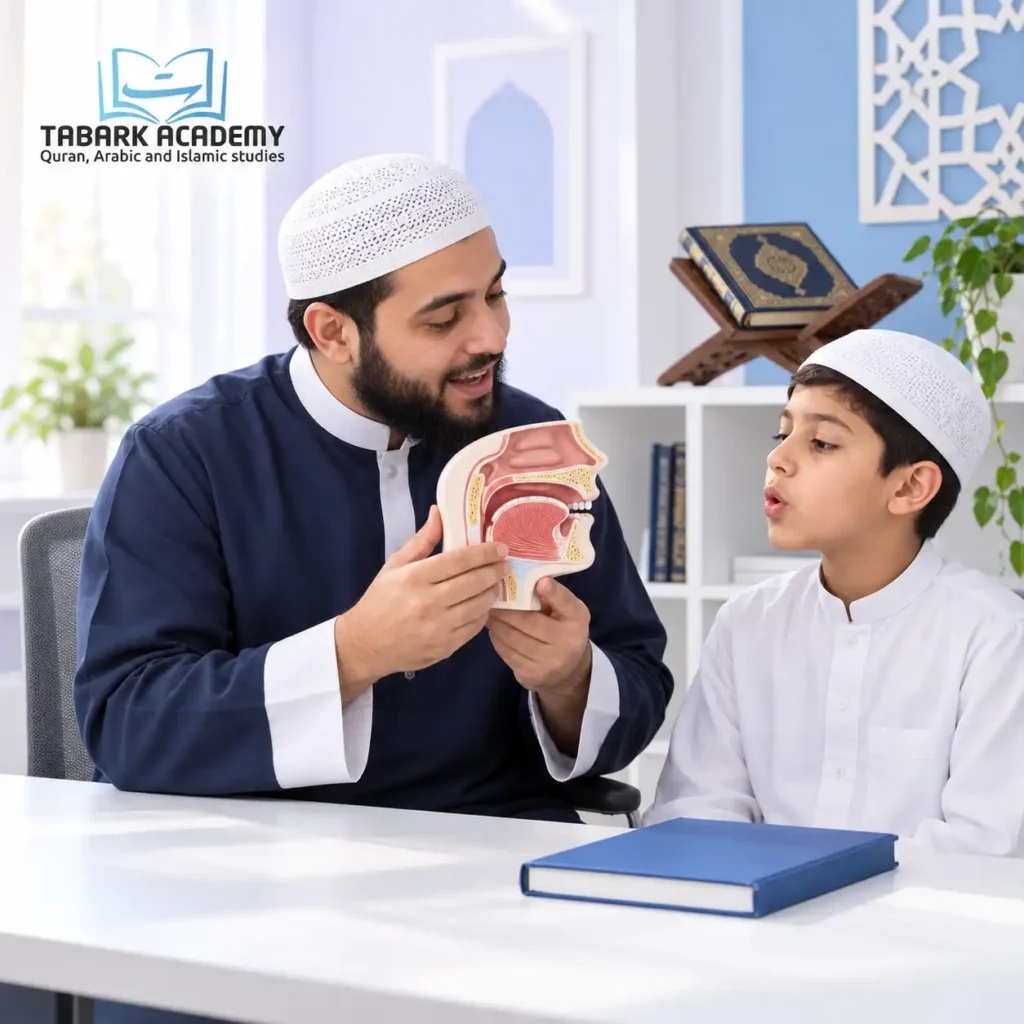
How to Read the Quran Without Knowing Arabic
You can start reading the Quran without knowing Arabic. With transliteration, audio recitation, translation, and regular practice, beginners can learn how to pronounce Quranic words while gradually becoming familiar with the Arabic script.
you can begin reading and reciting the Quran without already knowing Arabic. You don’t need to speak Arabic fluently to start learning how to pronounce the Quranic text and develop your reading skills.
For beginners, the best approach is to combine Arabic text, transliteration, audio recitation, and translation.
If you’re wondering how to read Quran without knowing Arabic, the key is to start with simple tools and build your skills gradually. You don’t have to learn everything at once.
A combination of transliteration, listening, translation, and guided practice can make the process much easier.
In this guide, you’ll discover how to read the Quran without knowing Arabic, the best approach for beginners, practical tips to improve your reading, and simple ways to understand the meaning of what you recite.
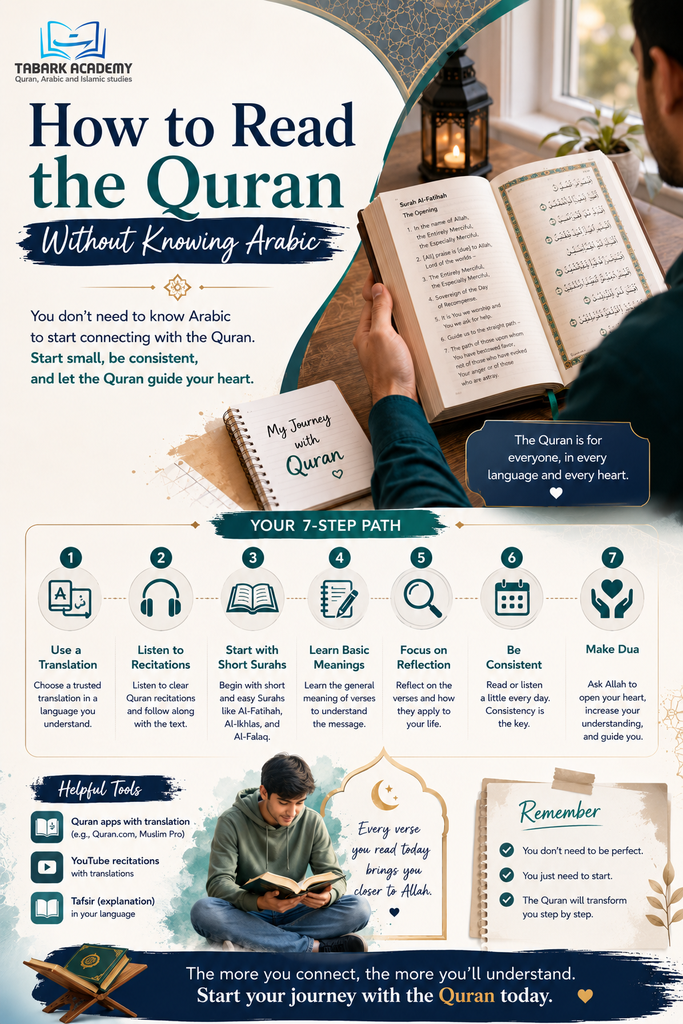
1. Use Transliteration as Temporary Support While Learning Arabic Script
Transliteration represents Quranic Arabic words using English letters, which can help complete beginners follow words they cannot yet recognize in Arabic.
However, transliteration cannot accurately represent every Arabic sound or Tajweed detail. Letters such as ع, ح, خ, ق, ص, and ض have qualities that English spelling cannot fully reproduce.
Use transliteration alongside the original Arabic text and audio recitation, rather than as a replacement for them.
As you learn more Arabic letters and vowel marks, gradually reduce your dependence on transliteration.
2. Listen to Clear Quran Recitation and Repeat Each Ayah Aloud
Listening is one of the most useful ways to become familiar with Quranic pronunciation before you can read Arabic independently.
Choose a clear reciter and work with a short passage. Listen to one Ayah while following the text, pause the recording, and repeat what you heard aloud. Then replay the Ayah and compare your pronunciation with the reciter.
This listen → repeat → compare → correct method trains your ear to recognize Quranic sounds while giving your tongue regular pronunciation practice.
3. Read an English Translation to Understand What You Are Reciting
Learning to pronounce Quranic words and understanding their meaning are related but separate skills. Even while your Arabic reading is developing, you can begin engaging with the meaning through a reliable translation.
After practicing an Ayah, read its translation and identify its main message. This allows your Quran study to develop in two directions: improving your ability to recite the Arabic text while increasing your understanding of what you are reciting.
Remember that a translation communicates an interpretation of the Quran’s meaning; it does not replace the original Arabic Quran.
4. Learn the Arabic Alphabet Gradually Until You Can Read Directly From the Quran
Do not allow transliteration to become permanent. Begin learning the Arabic alphabet alongside your listening and translation practice.
You do not need to become fluent in spoken Arabic before learning to read the Quran. Your immediate goal is to recognize the Arabic script and convert the letters and pronunciation marks you see into the correct sounds.
As this skill improves, try reading the Arabic first and checking transliteration only when you genuinely need help.
Read also:Reading the Quran in Transliteration: Is It Allowed?
Experience Our Interactive Learning
Curious about how we teach? Watch these brief video clips from our recent live sessions to see our structured curriculum, advanced learning platform, and dynamic student-teacher interactions firsthand.
5. Learn Basic Tajweed and Get Your Quran Pronunciation Corrected
Once you begin reading Arabic letters and words, introduce the Tajweed principles that have the greatest effect on accurate pronunciation.
Start with correct Makharij, particularly for letters that are difficult for speakers of your first language. Then gradually learn foundational rules involving Madd, Ghunnah, Qalqalah, and other common features of Quran recitation.
Whenever possible, recite to a qualified Quran teacher. A teacher can hear mistakes in Makharij, vowels, elongation, and other aspects of pronunciation that you may not recognize when practicing alone.
Start with the skills you have today, but keep working toward reading the Quran directly from its Arabic script with greater accuracy and independence.
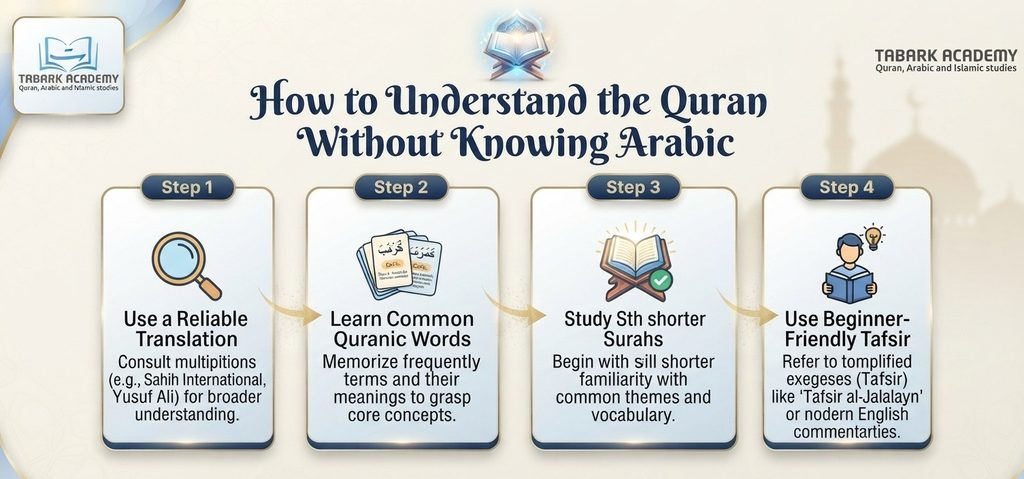
How to Understand the Quran Without Knowing Arabic
Being able to recite the Arabic text and being able to understand its meaning are two different skills. You can begin developing both at the same time, even if you currently know little or no Arabic.
Translation can give you access to the general meaning, while vocabulary study and Tafsir can gradually deepen your understanding of individual words, verses, and their context.
a. Use a Reliable Quran Translation to Understand the General Meaning
Read a reliable translation alongside the Arabic verses you are studying. After reciting an Ayah, read its translation and identify the central message before moving forward.
When a passage seems unclear, avoid building conclusions from the English wording alone. Translation has limitations, and some Quranic expressions require additional explanation or context.
Read also:How to Learn Quranic Arabic: A Beginner’s Guide
b. Learn Frequently Repeated Quranic Words to Build Your Vocabulary Gradually
You do not need to memorize thousands of Arabic words before Quranic vocabulary becomes useful.
Begin with frequently encountered words such as Allah, Rabb (Lord), Rahmah (mercy), and Kitab (book). When you encounter one of these words during recitation, try to recognize it before checking the translation.
Over time, this creates a direct connection between familiar Arabic words and their meanings instead of requiring you to translate everything through English.
c. Study the Meaning of Short Surahs You Already Recite Regularly
Start with Surahs that are already familiar from Salah and daily recitation, such as Al-Fatihah, Al-Ikhlas, Al-Falaq, and An-Nas.
For each Surah, learn its overall theme first. Then study the meaning of each Ayah and identify important recurring vocabulary.
Because you already hear and recite these Surahs regularly, connecting their Arabic words with their meanings can make both your Quran study and daily recitation more meaningful.
d. Use Beginner-Friendly Tafsir When Translation Alone Does Not Explain the Ayah
Translation can communicate the general meaning of an Ayah, but it cannot always provide its historical context, connections with surrounding verses, or explanations of expressions that carry deeper significance in Arabic.
A reliable beginner-friendly Tafsir can provide this additional context without requiring you to study advanced Arabic or classical Tafsir independently.
As your knowledge develops, combine recitation, translation, Quranic vocabulary, and Tafsir rather than treating any one of them as a complete substitute for the others.
Common Quranic Words Beginners Can Learn
Learning a few frequently repeated Quranic words can make reading and understanding the Quran easier.
Instead of trying to memorize a large vocabulary, start with words you encounter regularly in prayer and common Surahs.
| Arabic | Transliteration | Meaning |
| الله | Allah | God |
| رَبّ | Rabb | Lord |
| كِتَاب | Kitab | Book |
| يَوْم | Yawm | Day |
| نَاس | Nas | People |
| قُلْ | Qul | Say |
| رَحْمَة | Rahmah | Mercy |
| آيَة | Ayah | Sign or verse |
| دِين | Din | Religion or judgment |
| سَبِيل | Sabil | Way or path |
Try learning just 3-5 words at a time and look for them when you read or listen to the Quran. Each familiar word is another step toward being able to read the Quran without knowing Arabic and understand more of what you recite.
Read also:How Many Words Will Help You Understand the Quran?
A Simple Daily Routine for Reading the Quran
If you’re learning to read the Quran without knowing Arabic, a simple 15-20 minute daily routine can help you build pronunciation, reading, and comprehension skills gradually.
5 Minutes: Practice Arabic
Review Arabic letters, vowel marks, or a few Quranic words. If you’re still using transliteration, compare it with the original Arabic text.
5 Minutes: Listen and Repeat
Play a clear Quran recitation and follow the verses with your finger. Pause after short passages and repeat them aloud, paying attention to pronunciation.
5 Minutes: Read and Understand
Read the same verses yourself, then check a reliable translation. Try to identify any Quranic words you’ve already learned.
5 Minutes: Review
Go back to the words or verses you practiced earlier. Regular review helps you remember what you’ve learned and prevents you from constantly starting over.
A few focused minutes every day can be more effective than occasional long study sessions.
Tips for Beginners To Read The Quran Without Knowing Arabic
Learning to read the quran without knowing Arabic tips can feel challenging at first, but the right approach makes the process more manageable. Keep these practical tips in mind as you build your skills:
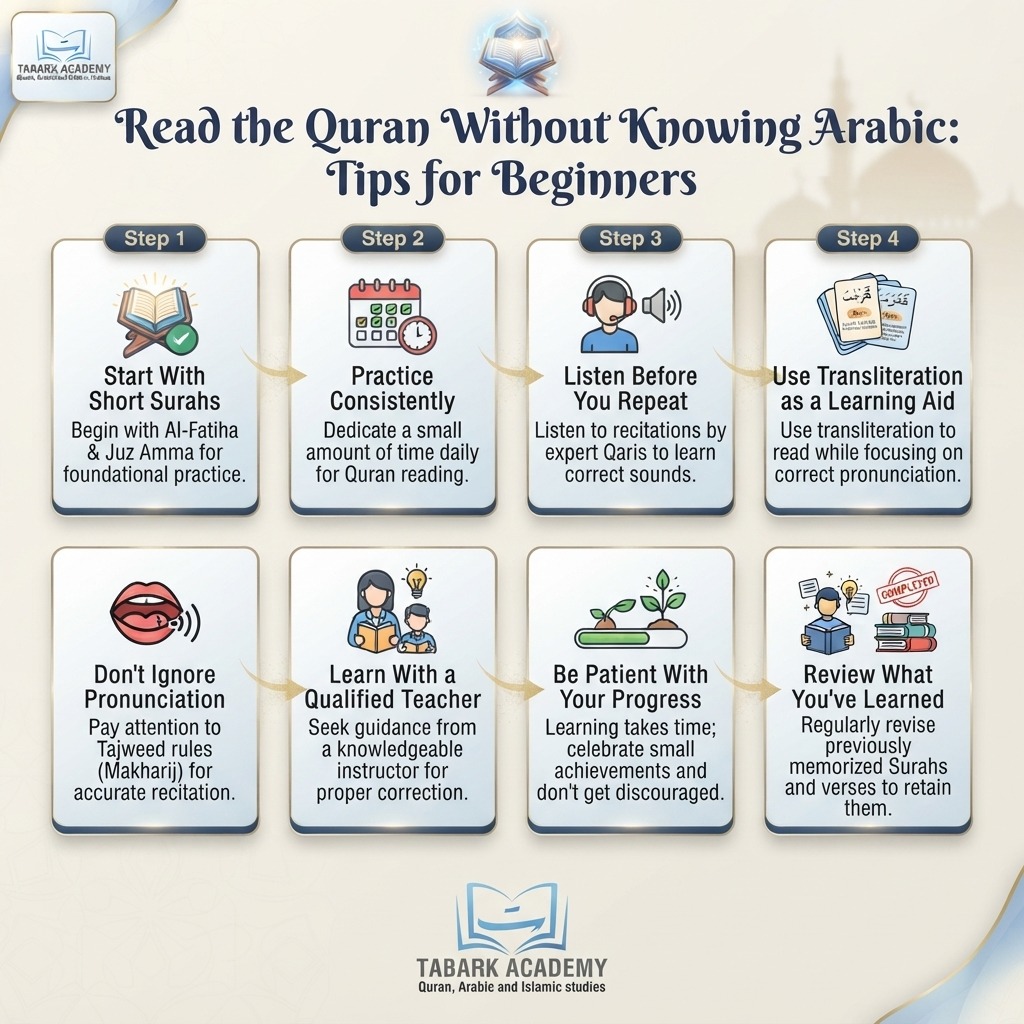
1. Start With Short Surahs
Begin with shorter Surahs that you already hear or recite regularly. Familiar verses can make it easier to recognize repeated words and practice pronunciation.
2. Practice Consistently
Set aside a small amount of time each day rather than trying to learn everything in one session. Consistency helps you build confidence and turn Quran reading into a regular habit.
3. Listen Before You Repeat
Listen carefully to a reliable recitation before reading a verse aloud. Then repeat it slowly and try to match the pronunciation as closely as possible.
4. Use Transliteration as a Learning Aid
Transliteration can be helpful when you’re still learning Arabic letters and sounds. However, don’t depend on it permanently. Use it alongside the Arabic text and gradually work toward reading the original script.
5. Don’t Ignore Pronunciation
Knowing what a word means isn’t enough if you’re learning to recite the Quran. Pay attention to Arabic sounds and basic Tajweed rules, especially when you’re unsure how a letter should be pronounced.
6. Learn With a Qualified Teacher
A teacher can listen to your recitation, identify mistakes, and explain pronunciation rules in a way that self-study tools may not. This can be especially helpful for beginners who aren’t familiar with Arabic sounds.
Read also: Quranic Arabic vs Modern Standard Arabic: Which Is Better?
7. Be Patient With Your Progress
You may struggle with certain letters or verses at first, and that’s completely normal. Focus on gradual improvement instead of comparing your progress with someone else’s.
8. Review What You’ve Learned
Return regularly to previously studied verses and vocabulary. Repetition helps reinforce pronunciation and makes familiar Quranic words easier to recognize when you encounter them again.
Start small, practice consistently, listen carefully, and gradually build your ability to read the Quran with confidence.
Step Inside Our Virtual Classrooms
See our engaging teaching methods in action! watch real snippets of our live classes and discover how our expert instructors make learning interactive, memorable, and inspiring for every student.
Learn to Read the Quran With Tabarak Academy
You don’t have to struggle through your Quran learning journey alone. Tabarak Academy provides online Quran learning designed with qualified teachers to help beginners and families build their reading and recitation skills step by step.
Why Learn With Tabarak Academy?
- Learn from home: Attend Quran lessons online without needing to travel.
- Beginner-friendly learning: Start from your current reading level and progress gradually.
- Improve pronunciation: Receive guidance and correction as you practice.
- Learn Tajweed: Build a stronger understanding of Quran recitation rules.
- Develop consistency: Follow a structured learning routine that makes regular practice easier.
- Family-friendly Quran learning: Parents and children can develop their Quran skills with convenient online learning.
If you’re searching for how to read the Quran without knowing Arabic, starting with the right guidance can make the experience much less overwhelming.
Start learning today and take the next step toward reading the Quran with greater confidence and understanding, Here’s our courses:
- Online Hifz Program
- Juz 30 Memorization
- Hifz for Kids
- Hifz for Adults
- Hifz for Sisters
- Short Surah Memorization Course
- Hifz Ijazah Course
Conclusion
You do not need to speak Arabic fluently before beginning to read and understand the Quran.
Start with the tools available to you today—listen to clear Quran recitation, use transliteration temporarily when necessary, read a reliable translation, and practice short passages consistently.
At the same time, work gradually toward greater independence. Learn the Arabic alphabet and vowel marks, reduce your reliance on transliteration, build a small Quranic vocabulary, and introduce basic Tajweed as your reading improves.
When a verse requires more explanation than a translation provides, use reliable Tafsir and qualified guidance to deepen your understanding.
Most importantly, do not measure your progress only by how quickly you can read or how many pages you complete. Progress can also mean recognizing Arabic words without transliteration, pronouncing a difficult letter more accurately, understanding the meaning of a familiar Surah, or reading an Ayah independently for the first time.
Ready to begin your Quran journey? Join Tabarak Academy today and learn Quran reading step by step with expert guidance from the comfort of your home.
FAQs
Can I read the Quran if I don’t speak Arabic?
Yes. You can begin learning Quran reading and recitation even if you don’t speak Arabic. Transliteration, audio recitation, and guided lessons can help you get started while you gradually learn the Arabic script.
What is the best way to read the Quran without knowing Arabic?
A combination of Arabic text, transliteration, audio recitation, translation, and regular practice is one of the most practical approaches. A qualified teacher can also help you improve pronunciation and Tajweed.
Should I learn Arabic or Quran first?
You don’t necessarily have to choose one. You can begin learning to read the Quran while gradually developing your Arabic reading skills and Quranic vocabulary. Starting with the Arabic alphabet and basic Quran reading is often a practical approach for beginners.
Can I learn Quran reading online?
Yes. Online Quran learning can provide structured lessons, live practice, pronunciation correction, and personalized guidance from home. This can be especially helpful if you don’t have access to a suitable local teacher.
How can I improve my Quran pronunciation?
Practice regularly, listen carefully to accurate recitation, repeat verses aloud, and study basic Tajweed.