
Learning how to memorize surah al baqarah is a goal for many Muslims, yet the length of this chapter often makes beginners hesitate. Surah Al-Baqarah is the longest surah of the Quran, with 286 verses, and memorizing it is very achievable with a clear plan, steady repetition, and regular review.
This guide explains a practical, step-by-step memorization method that works for adults, new Muslims, and kids. It covers how to divide the surah, which daily plan fits your schedule, how to handle similar verses, and how to keep what you memorize from slipping away.
1. Renew Your Intention And Asking Allah For Help
Renewing your intention (niyyah) means memorizing Surah Al-Baqarah for the sake of Allah alone, not for praise, prizes, or status. A sincere intention keeps you motivated on slow days and reminds you that every verse you memorize is an act of worship.
Begin each session with a short dua asking Allah to make His Book easy for you, bless your efforts, and keep what you memorize firm in your heart.
When you feel tired or discouraged, remind yourself of your purpose and renew your intention before continuing. This mindset helps you stay patient and consistent, even when memorizing a long surah like Al-Baqarah takes time.
2. Understand The Meaning Before You Memorize
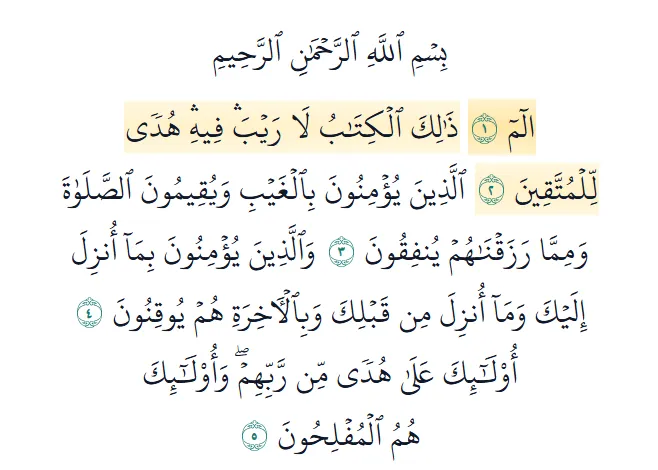
Understanding the meaning first turns memorization from repeating sounds into remembering ideas. Before memorizing a new portion of Al-Baqarah, read a reliable English translation and a simple tafsir (explanation). When you know what a passage is about, the order of its verses becomes logical and easier to recall.
New Muslims and kids benefit greatly from understanding the meaning first. Knowing the basic story behind a passage, such as the creation of Prophet Adam (peace be upon him) or the story of the cow, gives the mind a clear hook to hold the words in place.
This approach also helps learners develop a stronger connection with the Quran and remember the verses with greater understanding and appreciation.
3. Divid Surah Al Baqarah Into Small Portions
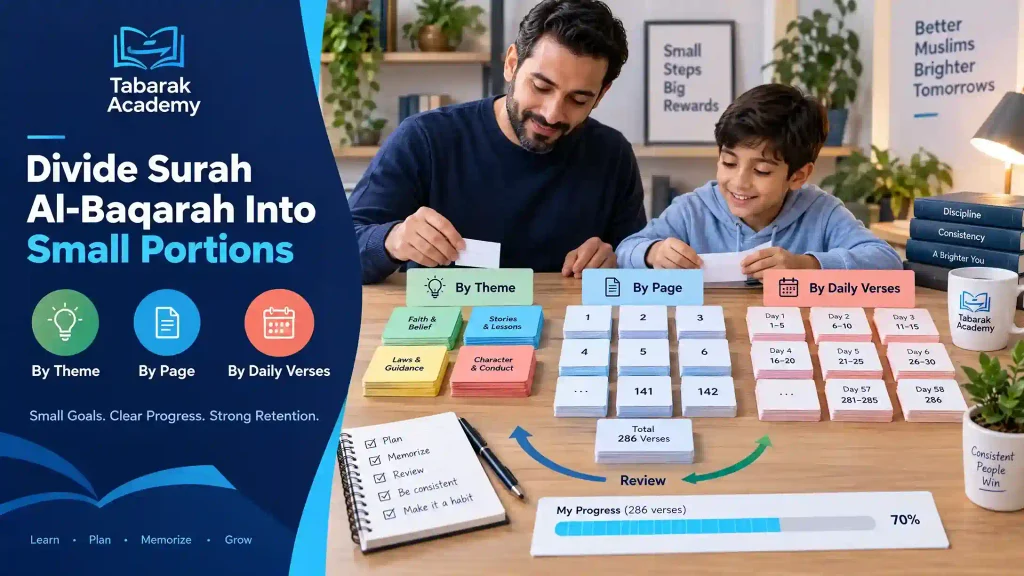
Dividing the surah means splitting its 286 verses into small, clear portions instead of memorizing randomly. Students usually divide Surah Al-Baqarah in one of three ways: by themes, by pages of the Mushaf, or by a fixed number of verses each day. Each method helps learners follow a structured plan, track their progress, and avoid feeling overwhelmed by the length of the surah.
The best approach depends on the learner’s age, memorization ability, and available time. Beginners may find it easier to start with a few verses daily, while more experienced students can follow page-based or theme-based portions.
Setting realistic daily goals and reviewing previously memorized sections regularly helps connect the portions and build long-term retention.
a. Dividing By Themes
Dividing Al-Baqarah by themes groups verses that tell one story or discuss one subject. This method works well because the surah moves through clear topics. The table below gives an approximate thematic map you can use to plan your memorization portions.
| Verses (Approx.) | Main Theme |
|---|---|
| 1 – 20 | Three types of people: believers, disbelievers, and hypocrites |
| 21 – 39 | The call to worship Allah and the story of Prophet Adam |
| 40 – 123 | The Children of Israel, including the story of the cow (67 – 73) |
| 124 – 141 | Prophet Ibrahim and the building of the Kaaba |
| 142 – 152 | The change of the Qiblah |
| 153 – 182 | Patience, righteousness, retaliation, and bequests |
| 183 – 203 | Fasting in Ramadan and the rites of Hajj |
| 204 – 242 | Social and family rulings, including marriage and divorce |
| 243 – 260 | Stories of Talut and Jalut, Ayat al-Kursi (255), and Ibrahim |
| 261 – 283 | Charity, the prohibition of riba (usury), and the verse of debt |
| 284 – 286 | The closing verses of faith and supplication |
b. Dividing By Pages Or Quarters
Dividing by pages means memorizing half a page, one page, or two pages of the Mushaf each day. Many students also use the official quarters (rub’) printed in the Mushaf, because their beginnings and endings become natural landmarks during recitation.
Always memorize from the same printed Mushaf when you divide by pages. Keeping one fixed layout helps your visual memory remember where each verse sits on the page, which makes recall faster during prayer and review.
c. Dividing By A Fixed Number Of Verses
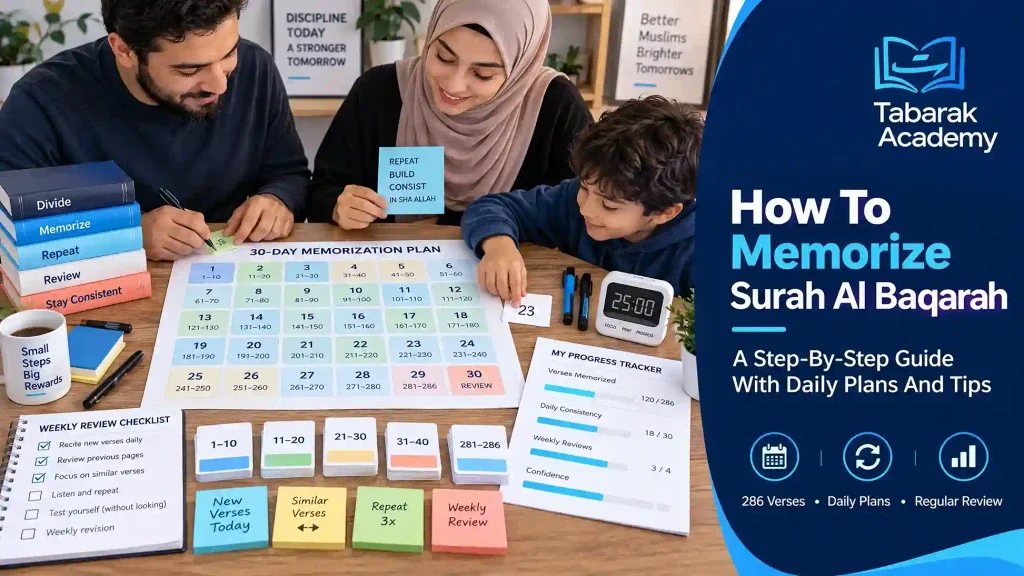
Dividing by verses means memorizing a set amount, such as 3, 5, or 10 verses a day. At 10 verses a day, you would finish the surah in about 29 days. Verse lengths vary a lot, and verse 282, the verse of debt, is the longest verse in the entire Quran.
Therefore, it is important to adjust your daily target according to the length and difficulty of each verse rather than following a fixed number every day.
Experience Our Interactive Learning
Curious about how we teach? Watch these brief video clips from our recent live sessions to see our structured curriculum, advanced learning platform, and dynamic student-teacher interactions firsthand.
Start Your Quran Learning Journey
Join Tabark Academy today for structured online lessons with qualified tutors, customized to fit your goals.
Book Your Free Trial Lesson4. Choose A Fixed Daily Time For Memorization
Choosing a fixed daily time builds a memorization habit that does not depend on mood or motivation. Early morning, when the mind is fresh and the house is quiet, is a favorite time for many students, as explained in this guide on how to memorize Quran after Fajr.
The peaceful atmosphere can help learners concentrate, absorb new verses, and begin the day with a meaningful act of worship.
If mornings are not possible, choose any 20 to 30 minute slot you can protect every day. A short memorization session done daily is far more effective than one long session done once a week. Try to follow the same routine consistently so your mind gradually becomes accustomed to memorizing at that time.
5. Listen To A Skilled Reciter Repeatedly
Listening repeatedly to a skilled Quran reciter trains your ear to recognize the correct pronunciation, rhythm, and order of the verses. Choose one reciter and stay with him throughout your memorization journey, since switching between different reciters may confuse your memory of pauses, tones, and recitation styles.
Use small pockets of time for listening to Al-Baqarah, such as during your drive to work or school, while cooking, or when walking. Passive listening does not replace active memorization, but it helps the verses become familiar before you begin learning them.
You can also pause after each verse and repeat it aloud to strengthen your listening skills and improve your ability to recall the words independently.
Read also: 9 Signs Of How To Know If Your Hifz Is Strong

6. Repeat Each Verse Aloud From Sight And Memory
Repetition (takrar) is the core of Quran memorization and helps transfer new verses into long-term memory. Read one verse aloud from the Mushaf about 10 times, focusing on correct pronunciation and Tajweed, then recite it from memory about 10 times without looking.
If a verse is long or difficult, split it into shorter phrases and master each part before connecting them. Once two verses are solid, recite them together several times so they flow naturally and become easier to remember.
Many students do not forget the verses themselves but struggle with the transitions between them, so practice joining the last words of one verse to the first words of the next.
A structured short surah memorization course helps you practice the method before you start Al-Baqarah.

7. Write The Verses By Hand
Writing the portion you memorized in a dedicated Hifz notebook strengthens visual memory and helps reveal small mistakes in letters, words, or verse order. After memorizing, write the verses from memory without looking at the Mushaf, then compare your writing with the original text and correct any errors.
This step is especially useful for long verses with similar wording, where learners may accidentally skip a phrase, repeat a word, or confuse one verse with another.
You can also write difficult verses more than once until you feel confident remembering them accurately. Over time, your notebook becomes a personal record of your progress and helps you identify the passages that need extra revision.
Read also: How Many Verses Should A Child Memorize Per Day
8. Recite With Tajweed At A Measured Pace
Reciting with tajweed means pronouncing every letter correctly and applying the rules of Quranic recitation. Allah commands measured recitation (tartil) in the Quran. Slow, careful recitation also helps memory, because rushing hides mistakes that later become hard to fix.
أَوْ زِدْ عَلَيْهِ وَرَتِّلِ ٱلْقُرْءَانَ تَرْتِيلًا
“Or add to it, and recite the Qur’an with measured recitation.”
Children who are still learning the rules of recitation should fix their tajweed alongside memorization. Parents can explore a Tajweed with Quran course for kids that teaches correct pronunciation while children memorize.
9. Recite Your Memorization To A Teacher Or Partner
Reciting to someone else (tasmi’) catches mistakes you may not notice when practicing alone. A qualified Quran teacher can correct pronunciation, point out skipped or repeated words, and help you maintain the correct order of verses.
Regular recitation in front of a teacher also keeps you accountable and allows you to track your progress. Even a family member or friend who follows along in the Mushaf can be a great help, especially during daily revision.
Sisters who prefer learning with a female tutor in a private setting can read Best Online Quran Classes For Ladies.
10. Recite New Portions In Your Daily Prayers
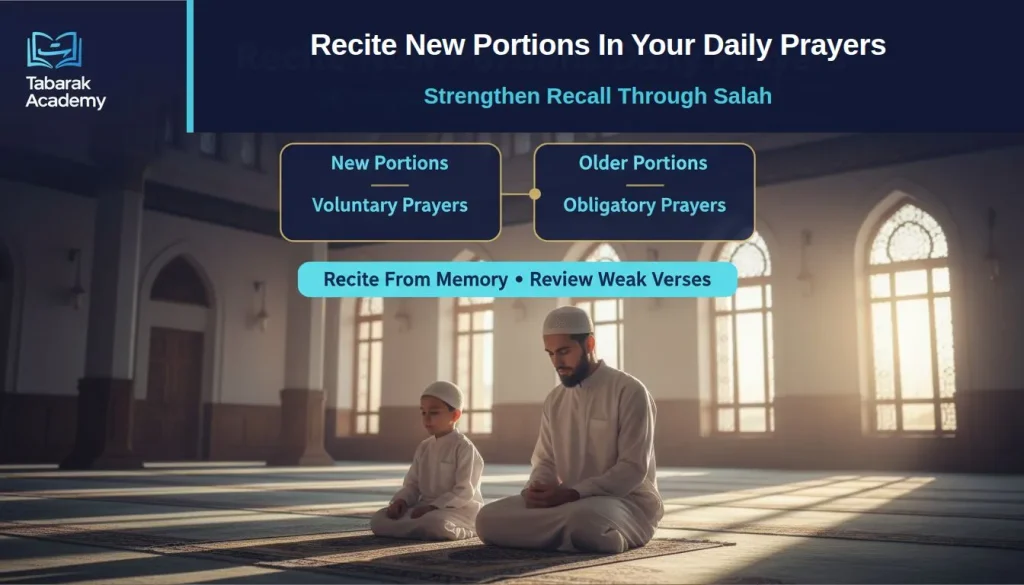
Reciting what you memorize in your daily prayers (salah) is one of the strongest ways to strengthen long-term memory and maintain what you have learned. Recite your newest verses of Al-Baqarah in voluntary prayers, such as Sunnah and night prayers, and older portions in obligatory prayers.
Prayer requires you to recite from memory without looking at the Mushaf, giving you a practical opportunity to test your recall and identify any weak sections.
If you struggle to remember a verse during prayer, review it afterward and repeat it until you can recite it confidently. This practice also helps you build a deeper connection with the Quran by making memorized verses part of your daily worship.
11. Review Daily And Weekly
Review (muraja’ah) is what keeps Surah Al-Baqarah in your memory for life. Before memorizing anything new each day, recite the portions from the previous few days. Then set one day each week, such as Friday, to review everything you have memorized so far.
تَعَاهَدُوا الْقُرْآنَ فَوَالَّذِي نَفْسِي بِيَدِهِ لَهُوَ أَشَدُّ تَفَصِّيًا مِنَ الإِبِلِ فِي عُقُلِهَا
“Keep on reciting the Qur’an, for, by Him in Whose Hand my life is, Qur’an runs away (is forgotten) faster than camels that are released from their tying ropes.”
This hadith in Sahih al-Bukhari teaches that memorized Quran leaves the memory quickly when it is neglected.
Choosing A Daily Plan To Memorize Surah Al Baqarah
Choosing the right daily plan depends on your time, age, and experience. The best plan is the one you can keep every single day, even on busy days. The table below compares common plans based on the 286 verses and roughly 48 pages of Al-Baqarah.
| Daily Amount | Approx. Time To Finish | Best For |
|---|---|---|
| 3 verses a day | About 3 months (96 days) | Kids and complete beginners |
| Half a page a day | About 3 months (96 days) | Busy adults and working parents |
| One page a day | About 7 weeks (48 days) | Steady learners with 30 to 45 minutes daily |
| 10 verses a day | About 1 month (29 days) | Students with an hour each day |
| Two pages a day | About 3.5 weeks (24 days) | Experienced memorizers |
These estimates do not include review-only days, so add extra time to your plan. If you are new to memorization, this weekly Hifz plan for beginners shows how to balance new verses with review across the week.
Memorize Surah Al Baqarah Tips For Difficult And Similar Verses
Some passages of Surah Al-Baqarah are harder to memorize than others because of their long verses, complex wording, or similarities between certain passages. These memorize Surah Al-Baqarah tips help you overcome the most common challenges memorizers face, improve your recall, and avoid confusing similar verses.
By understanding these difficulties and using the right techniques, you can make your memorization journey more manageable and consistent. Remember that struggling with certain verses is a normal part of learning a long surah, so do not rush or become discouraged.
With patience, focused repetition, and regular revision, even the most challenging passages can become easier to recall.
1. Handling Similar Verses (Mutashabihat)
Mutashabihat are verses with similar wording that appear in different places in the Quran. Al-Baqarah shares several such passages with other surahs, especially in the stories of the Children of Israel.
Pay attention to changes in individual words, sentence order, and endings, as these small details can help you distinguish between similar passages. Reciting each version separately and then comparing them aloud can also strengthen your recall.
2. Using Mind Maps And Visual Anchors
A mind map is a simple diagram that shows the main topics of a passage and their order. Drawing one for each portion of Al-Baqarah helps you see where each story starts and ends.
You can also note where a verse sits on the page: top, middle, or bottom. Add short keywords or simple symbols beside each section to create visual reminders of its main idea. These visual anchors help you remember the sequence of topics and find your place when recalling a passage.
3. Using Famous Verses As Landmarks
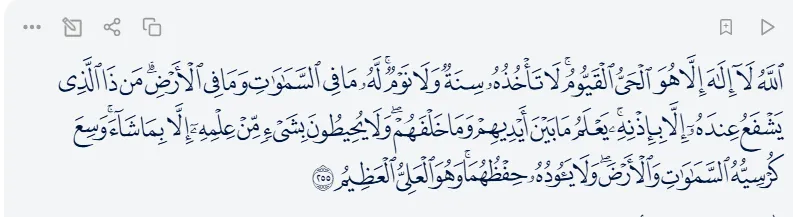
Well-known passages such as Ayat al-Kursi and the closing verses (2:285 – 286) work as landmarks inside Al-Baqarah. Many people already know them, so use them as fixed points that divide the long surah into familiar sections.
You can organize your memorization plan around these passages, setting smaller goals for the verses before and after each landmark. This makes it easier to track your progress and recognize how different portions fit together.
4. Avoiding Common Memorization Mistakes
The most common mistakes when memorizing Al-Baqarah are memorizing too much at once, skipping review, switching between Mushaf prints, and moving on before a portion is truly fluent. If you notice weak spots, spend a few days on review only before adding new verses.
Try to identify the reason behind each mistake, whether it is confusing similar words, forgetting a transition, or struggling with a long verse.
Read also: How Long Should AChild Memorize Quran Each Day
Step Inside Our Virtual Classrooms
See our engaging teaching methods in action! watch real snippets of our live classes and discover how our expert instructors make learning interactive, memorable, and inspiring for every student.
How To Memorise Surah Al Baqarah With Kids
Children can memorize long surahs successfully when the learning plan matches their age, attention span, and reading ability. When teaching kids how to memorise Surah Al-Baqarah, parents and teachers should focus on making the process enjoyable, gradual, and consistent. Here are some practical tips to help children memorize more confidently:
- Use small portions: Start with just two to three verses at a time instead of asking children to memorize long passages.
- Keep sessions short: Aim for 10 to 15 minutes per session to match children’s attention spans and prevent boredom.
- Encourage listening and repetition: Let children listen to a skilled reciter and repeat the verses several times with a parent or teacher.
- Explain the meaning simply: Tell the stories behind each passage in age-appropriate language and use visual aids to make the ideas easier to understand.
- Choose a qualified teacher: A dedicated Hifz program for kids offers structured memorization, regular revision, and gentle correction from qualified tutors.
Start Your Quran Learning Journey
Join Tabark Academy today for structured online lessons with qualified tutors, customized to fit your goals.
Book Your Free Trial LessonStart Memorizing Surah Al Baqarah With Tabarak Academy
Memorizing Surah Al-Baqarah becomes much easier with a qualified teacher, a personal plan, and regular recitation sessions. Tabarak Academy offers online Quran, Hifz, and Tajweed courses for kids and adults, guided by qualified tutors and shaped around each student’s goals.
Book a free trial lesson, meet your tutor, and receive a memorization plan built around your level, schedule, and target date for completing Al-Baqarah.

Our Quran Memorization / Hifz Courses
- Online Hifz Program
- Juz 30 Memorization
- Hifz for Kids
- Hifz for Adults
- Hifz for Sisters
- Short Surah Memorization Course
- Hifz Ijazah Course
Conclusion
Learning how to memorize Surah Al-Baqarah is a long journey made of small, steady steps that require patience and sincere intention. Start by understanding the meaning of the verses, dividing the surah into manageable portions, and repeating each portion aloud until you can recite it smoothly without looking at the Mushaf.
Protect what you memorize by reciting it to a qualified Quran teacher, including it in your daily prayers, and following a consistent revision schedule. Review older portions regularly before adding new ones, and give difficult verses extra attention.
The best way to memorize Surah Al-Baqarah is the plan you can maintain every day. With patience, consistency, and Allah’s help, you can reach the final verse and build a lasting connection with the Quran.
Frequently Asked Questions About Memorizing Surah Al Baqarah
How long does it take to memorize Surah Al Baqarah?
Memorizing Surah Al-Baqarah usually takes one to three months with a daily plan. At 10 verses a day it takes about 29 days, at one page a day about 7 weeks, and at half a page a day about 3 months, plus review time.
What is the best way to memorize Surah Al Baqarah for beginners?
For beginners, the best way to memorize surah al baqarah is to learn three to five verses a day, understand their meaning first, repeat them aloud many times, and review previous portions before adding new ones.
Can I memorize Surah Al Baqarah in 30 days?
Yes, memorizing Surah Al-Baqarah in about 30 days is possible at around 10 verses a day. This pace usually needs about an hour of daily memorization and review, so it suits people with some previous Hifz experience.
Can kids memorize Surah Al Baqarah?
Yes, kids can memorize Surah Al-Baqarah when lessons are short and consistent. Two to three verses a day, daily listening, and regular review with a patient teacher is a realistic pace for many children.
Should I memorize Surah Al Baqarah by pages or by verses?
Both methods work, so choose the one that fits your schedule. Memorizing by pages fixes the Mushaf layout in your visual memory, while memorizing by verses gives you an equal and predictable daily amount.
How do I stop forgetting the verses I memorized?
Daily review (muraja’ah) is the most effective way to stop forgetting memorized verses. Recite recent portions every day, recite older portions in your prayers, and dedicate one day each week to reviewing everything.




0 Comments