


How to Teach a 5 Year Old to Memorize Quran
Watching a five-year-old recite even one short surah from memory is one of the most rewarding moments a parent can have. If you’re wondering how to teach a 5 year old to memorize Quran without turning it into a battle of wills, the answer isn’t a secret technique.
It’s a simple, repeatable method applied with patience and consistency. Whether you spell it memorize or memorise, the approach below works the same way everywhere.
Age five sits inside what child development researchers call the early-childhood window for language absorption. It’s the same window when a child easily picks up a second spoken language. That makes five one of the most productive ages to begin, as long as the method fits how a five-year-old’s memory actually works.
If you are a 5-year-old child searching for a solution, congratulations, you have found one. This guide walks through the exact steps to take and a realistic daily routine to follow. It also covers the mistakes that quietly derail most beginners and which surahs to start with.

1. Teach Your 5-Year-Old Child To Memorize Quran
Five-year-olds have strong auditory memory but limited working memory. They can hold and repeat a short phrase almost immediately, but they can’t yet manage long stretches of unfamiliar text the way a ten-year-old can. That’s exactly why short, repetition-based memorization suits this age better than reading-based methods.
It also means progress at five looks different from progress at eight. A realistic goal is one to two short surahs per week for a true beginner, not a fixed number of pages.

a- What A Five-Year-Old Can Hold Onto Right Now?
At this age, a child memorizes best in small, sound-based units; a phrase, or a single ayah. They aren’t yet reading and decoding the Arabic script; most five-year-olds haven’t learned it yet. This is why the method is called talqin.
An adult or teacher recites the verse aloud first, and the child repeats it purely by ear; no reading required.
b- Setting A Realistic Starting Point
Don’t measure early progress against how much text your child produces. Measure it against how confidently they repeat a phrase back to you unprompted. That confidence is what carries them into longer surahs later.
2. Use Talqin Method, Or Listen-And-Repeat
Talqin is the oral transmission method used to teach the Quran for well over a thousand years. It still forms the foundation of how children memorize today: the adult recites, the child listens, and the child repeats, no independent reading required.

Every session, regardless of which surah you’re on, follows the same three steps.
a- Start With The Shortest Surahs
Begin with the shortest surahs in the Quran. Al-Fatiha, Al-Ikhlas, An-Nas, Al-Falaq, and Al-Kawthar make up the standard starting set.
Their short ayahs and repeated endings give a five-year-old an early sense of accomplishment, which keeps them willing to continue.Master one surah completely; meaning your child can recite it start to finish without your help, before introducing the next one. Moving on too early is the single biggest reason children forget what they’ve “memorized.”
b- Read, Then Have Your Child Repeat — Five To Ten Times
Recite the ayah slowly and clearly, then have your child repeat it back. Do this five to ten times per ayah before moving to the next one. This range isn’t arbitrary. It’s roughly how many repetitions it takes for a short phrase to move from short-term to working memory in a young child.
If you can recite yourself correctly, you can lead these sessions. If you’re not confident in your own tajweed, the rules governing correct Quranic pronunciation, it’s worth having a qualified teacher lead the recitation instead.
A five-year-old memorizes whatever pronunciation they hear first, mistakes included, so this is one place a private tutor earns their keep. A teacher who catches a mispronounced letter in week one saves months of unlearning it later.
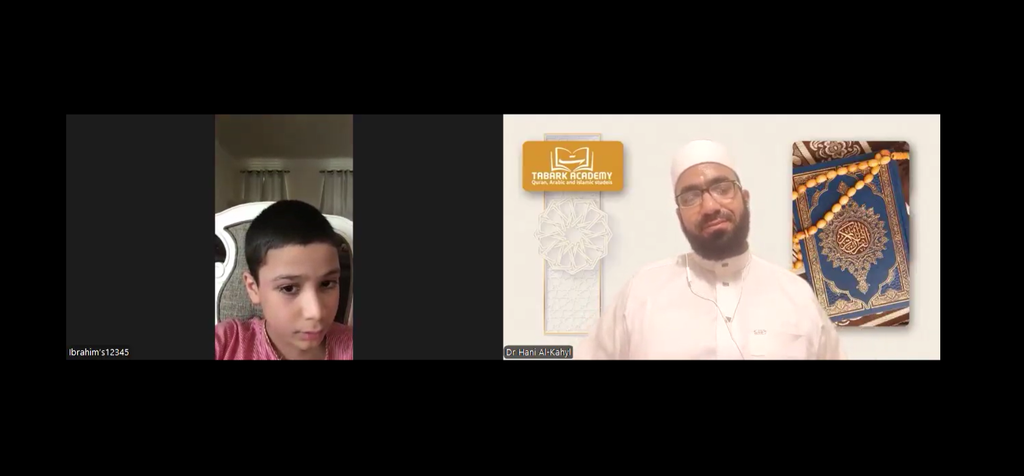
That’s exactly why Tabarak Academy‘s Noorani Qaida and kindergarten-level Quran classes run as one-on-one sessions with Al-Azhar-certified teachers, not group classes.
Watch Tabarak Academy classes with young learners
c- Break Long Ayahs Into Smaller Word Groups
When an ayah is longer than your child can repeat comfortably in one go, split it into two or three word groups. Master each piece, then join them together.
This is the same chunking principle used to teach children phone numbers or long words: smaller pieces first, then the whole.
Experience Our Interactive Learning
Curious about how we teach? Watch these brief video clips from our recent live sessions to see our structured curriculum, advanced learning platform, and dynamic student-teacher interactions firsthand.
3. Build A Daily Routine for Memorization
The method matters, but consistency is what actually produces a hafiz. A child who memorizes for 10 minutes every day will outpace one who does 45 minutes twice a week.
That’s because memory retention depends on spaced repetition, not total time. But how to apply that?
a- Choose A Fixed 10 to 15 Minute Slot
Pick one consistent time. Right after waking up or in a calm moment before bed, both work well, since the mind is less cluttered. Avoid starting a session the moment your child is visibly hungry, overtired, or mid-meltdown.
The goal is a calm five to ten minutes, not a fight. If you’re not sure which slot suits your child, test morning for one week and evening for the next. Note which one needs fewer repetitions before your child gets it right; that’s your answer.
b- Review First, Then Repeat, And Rest
Open every session with two minutes of reviewing yesterday’s ayah before touching anything new. Review before new material is the single habit that matters most here. It’s what separates children who retain their memorization for years from those who “lose” surahs a month after learning them.
After the review, move to the new material using the listen-repeat steps above, then close the session there. Don’t extend a good day into a second surah; ending on success is what makes tomorrow’s session easier to start.
c- Track Progress On A Simple Chart
A basic weekly chart with columns for the day, the surah, and a checkbox for “reviewed” gives your child something visual to point at.
Let your child put the sticker or checkmark in themselves. For a five-year-old, that physical act of marking progress matters more than the chart itself.
Families using Tabarak Academy’s programs get this tracking built in automatically. Monthly progress reports let you see retention over time, instead of guessing.
Have a look at hifz courses for kids

4. Keep the Memorization Session Enjoyable
A technically correct method still fails if the child dreads the session. These four adjustments make the biggest difference in how willingly a five-year-old shows up each day.
a- Reward Small Wins Immediately
A small reward works better than a big one saved for the end of a whole surah. A sticker, five extra minutes of play, or simply reciting proudly in front of a grandparent all do the job.
At this age, the gap between effort and reward needs to stay short for the reward to feel motivating.
Read also: How to Memorize Juz Amma Perfectly in No Time
b- Let One Reciter’s Voice Become Familiar
Play a recording of the same reciter reading the current surah during quiet moments in the day: in the car, during a bath, before nap time. Repeated passive listening reinforces the correct pronunciation your child heard in the active session, without adding another “lesson” to the day.
c- Give An Active Child Something To Do While Memorizing
If your child struggles to sit still, let them recite while walking, rocking, or lightly clapping a rhythm with each phrase. The movement isn’t a distraction here; it gives an energetic child’s body something to do so their attention can stay on the words.
d- Use The Stories Behind The Surahs
Telling the story connected to a surah gives the words a scene to attach to, instead of leaving them as abstract sounds to repeat. For example, try the story of the People of the Elephant before Surah Al-Fil, or the she-camel before Surah Ash-Shams.
A child who understands roughly what a surah is about memorizes it faster than one repeating unfamiliar phrases with no context.
Read also:The Ideal Age to Start Teaching Quran Memorization to Kids

5. Avoid The Mistakes That Slow Down A 5 Year Old’s Memorization
Most stalled progress traces back to one of three habits, all of them well-intentioned.
a- Rushing To The Next Surah Too Soon
Moving on before a surah is fully secure feels like progress but usually means neither surah sticks. Confirm mastery before advancing. The checklist further down gives you a concrete way to test this.
b- Correcting Mistakes Harshly
A sharp correction teaches a five-year-old to fear the session, not to fix the error. Gently repeat the correct version yourself and have them try again; the correction lands the same way without the emotional cost.
c- Comparing Your Child To Siblings Or Classmates
“Your sister was already on Surah An-Nas at your age” undermines motivation more than any wrong recitation does. Every child’s memorization speed varies; compare this week’s progress to last week’s, not to another child’s.
Read also: How to Teach a 4-Year-Old the Quran – A Step-by-Step Guide

Step Inside Our Virtual Classrooms
See our engaging teaching methods in action! watch real snippets of our live classes and discover how our expert instructors make learning interactive, memorable, and inspiring for every student.
Book A Free Trial Class And Start Your Child’s Hifz Journey TODAY
You don’t have to build this routine alone, and you don’t have to guess whether your child’s pronunciation is correct.
Tabarak Academy has spent 25 years teaching Quran memorization to children online. Al-Azhar certified teachers there currently guide more than 6,800 students across 15+ countries, including plenty of five-year-olds just starting out with Noorani Qaida and their first surahs.
A private 1-on-1 class means your child gets a teacher’s full attention for every minute. Correction happens in real time, before a mistake becomes a habit, and you receive monthly reports showing exactly what’s been mastered.
Female teachers are available for girls at no extra cost, and sessions are scheduled around your family’s routine, not the other way around.

Check Our Courses
- Online Quran & Arabic Classes | Foundation
- Recitation Of Quran with Tajweed Course
- Islamic Studies Course Online
- Arabic Alphabet Learning Course
- Noorani Qaida Course for Adults
- Quranic Arabic Course for Kids
- Arabic and Quran Classes for Kindergarten
- Islamic Summer Camp
- Hifz for Kids Course
- Hifz Course for Sisters
- Hifz for Adults Course
- Online Hifz Program
- Noor Al-Bayan Course
Conclusion
Teaching a five-year-old to memorize Quran comes down to one thing: a method that fits how a five-year-old’s memory actually works. Short surahs, oral repetition, and review before anything new — held together by consistency, not intensity.
Ten focused minutes a day, done the same way each day, will out-produce an inconsistent hour every time.
Three habits stall most children: moving on before mastery, correcting too harshly, and measuring your child against another child’s pace. Drop those, and the routine does the rest.
And whichever path you take — teaching at home, a local Quran circle, or a private online teacher — what matters most is the feeling your child attaches to these ten minutes. Aim for warmth and small wins, not pressure. That’s the difference between a child who memorizes a surah and a child who carries it for life
Frequently Asked Questions
What Is The Best Age To Start Teaching A Child To Memorize Quran?
Most children are ready to begin around age three to five, once they can sit briefly and repeat spoken phrases back accurately.
Five is a particularly strong starting point. By this age, attention span and auditory memory are both developed enough for a structured 10-to-15-minute daily session.
How Long Should A 5 Year Old’s Daily Quran Memorization Session Be?
A session of 10 to 15 minutes is enough at this age. Spend the first two minutes reviewing yesterday’s material, then use the rest for new repetition. Longer sessions tend to produce diminishing returns once a five-year-old’s attention starts to drift.
Which Surahs Should A 5 Year Old Memorize First?
Start with the shortest surahs in the Quran — Al-Fatiha, Al-Ikhlas, An-Nas, Al-Falaq, and Al-Kawthar are the standard first set. Their short length and repeated phrasing give a beginner an early, motivating sense of completion.
How Do I Know My Child Has Actually Memorized A Surah, Not Just Repeated It?
A surah is genuinely memorized when your child can recite it correctly, unprompted, on three separate occasions across three different days.
If they still need you to start each ayah for them, treat it as still in progress and keep reviewing before moving on.
What If My Child Forgets A Surah They Already Memorized?
Forgetting is normal without regular review — it doesn’t mean the earlier work was wasted. Add the forgotten surah back into your daily two-minute review rotation for a week; recovery is almost always faster than the original memorization.
Should I Teach Tajweed Rules Before Starting Memorization At Age Five?
Formal tajweed terminology is usually introduced after age six or seven, once a child can grasp abstract rules.
Before that, a five-year-old absorbs correct pronunciation naturally, simply by repeating after a teacher who applies tajweed correctly. They don’t need to know the rule names yet.