

5 Quran Memorization Games for Kids
Quran memorization games for kids are interactive activities that turn memorizing and reviewing verses into play. They use points, challenges, and friendly competition instead of plain repetition. For a busy parent, the right game can turn a child who dreads Hifz into one who asks for it. Let’s check that together.
Quran memorization games for kids are structured activities built around the two core tasks of Hifz: learning new verses and reviewing old ones. They apply game mechanics like scoring, randomness, and storytelling to make Quran memorization a game instead of an obligation.
Instead of repeating an ayah silently until it sticks, a child drags words into order, spins a wheel, or solves a puzzle. The memorization work still happens. It just doesn’t feel like work. Programs that weave gamified review into daily lessons tend to hold a child’s attention best.
Several game formats have become common across Quran learning apps, classrooms, and teacher-led lessons. Each one reinforces a different memorization skill.
1. Ayah Word-Order And Complete-The-Ayah Games
The child drags or selects words to rebuild a verse in order, or fills in one missing word from an ayah they already know. This targets sequencing, one of the hardest parts of Hifz, since Arabic word order rarely matches how children naturally think.
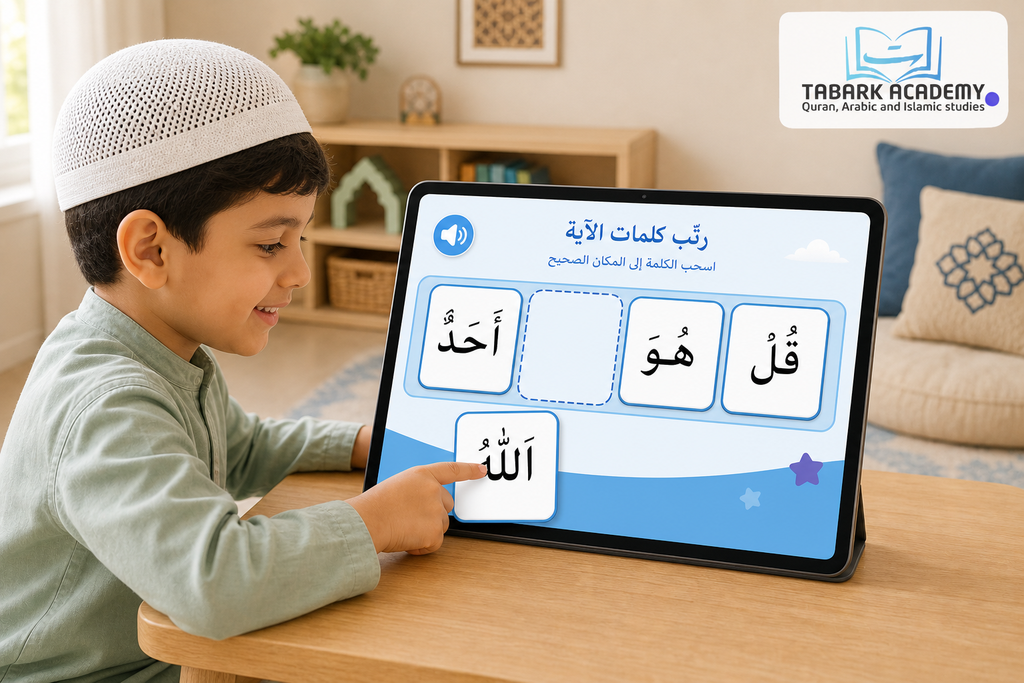
Sequencing is where most memorization breaks down. A child can often recall every word of an ayah individually and still stumble over which one comes third. Scrambling the words and asking them to rebuild the verse isolates that exact weakness instead of hiding it under a fluent-sounding recitation.
Use this format on the same day new verses are introduced, while the ayah is still fresh but not yet locked in. Start by removing a single word, then two, then ask for the full sequence from scrambled pieces.
For children who can’t read Arabic yet, the audio version works the same way: play a recitation with one word muted and let the child supply it aloud.
One caution: keep the scrambled words visible in large, clear script. A child squinting at tiny text is solving a reading puzzle, not a memory one
2. Spinning Wheel Recitation Games
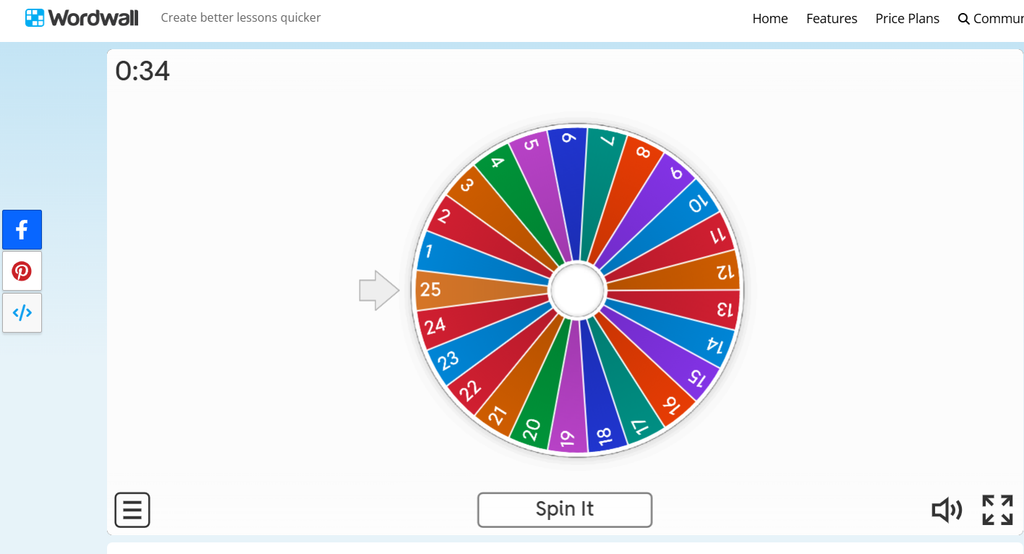
A digital or paper wheel lands on a random Surah or ayah number, and the child recites it on the spot. Because the choice is random, the child can’t rely on rehearsed order. The review becomes a genuine memory test, not a recital of habit.
Most children memorize in chains. Ask them to recite Surah Al-Qadr and they’ll manage it easily, but ask for ayah four alone and they quietly restart from ayah one to get there. That chain works fine at home and fails in prayer, where an imam may begin mid-Surah and the child has nothing to hook onto.
The wheel breaks the chain deliberately. Load it only with Surahs your child has already memorized, spin once or twice a day, and keep the whole thing under five minutes.
Award a point for a clean recitation and half a point for one that needed a prompt, so the child can see progress week to week rather than just pass or fail.
A paper wheel or a shuffled stack of numbered cards does the same job with no screen involved.
Check the Quran courses available at our Tabarak Academy
Experience Our Interactive Learning
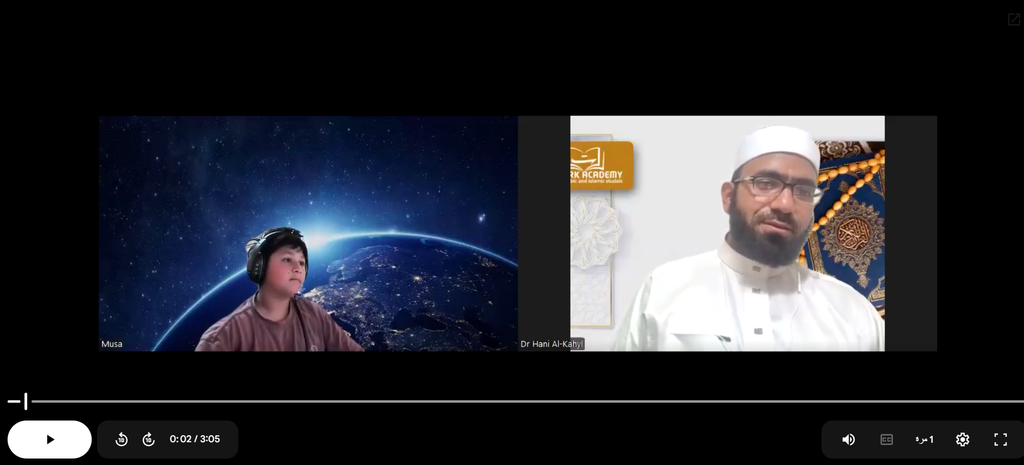
Curious about how we teach? Watch these brief video clips from our recent live sessions to see our structured curriculum, advanced learning platform, and dynamic student-teacher interactions firsthand.
3. Guess-the-Surah Listening Games
Your child hears the first words of an ayah and says which Surah it comes from, or recites the part that follows. This trains careful listening and ties the sound of a verse to its meaning, instead of copying sounds without thinking.
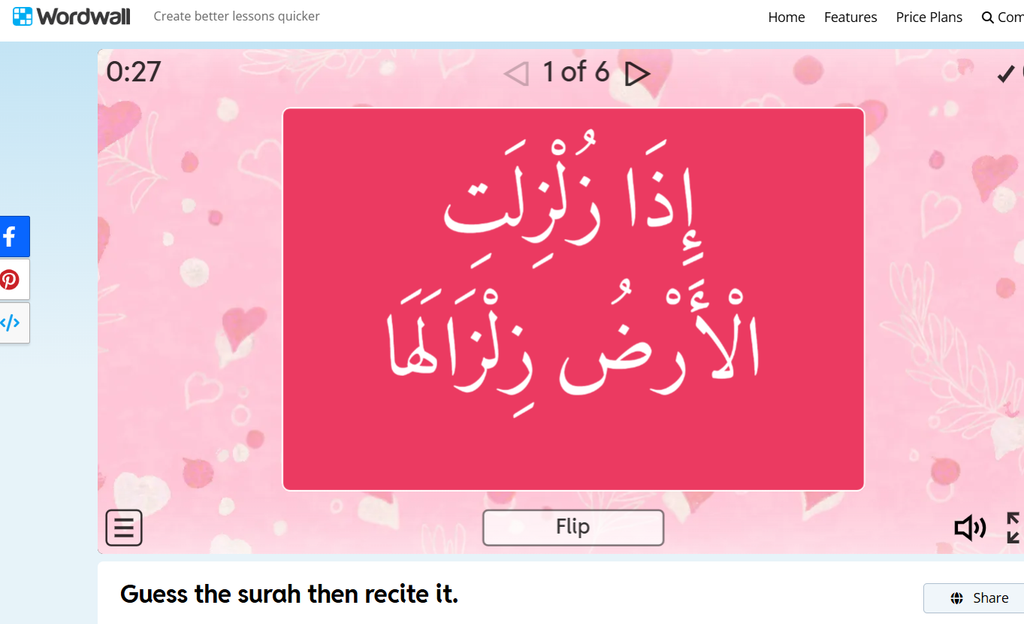
This game is the closest one to real recitation. In Tarawih or any group prayer, your child hears a few words and has to know the Surah right away. Practicing that at home turns prayer into something they follow, not just stand through.
It also works best for children who can’t read yet, because nothing has to be read on a page or screen. You need no materials at all. Just recite the first half of an ayah, stop, and let your child finish it. Swap roles sometimes and let them test you. Make a mistake on purpose so they can catch it.
Meaning makes it even better. Once your child names the Surah, ask what the ayah is about in one sentence. Sound plus meaning sticks much longer than sound alone.
4. Puzzle And Adventure Games For Tajweed And Mutashabihat
Maze- or level-based games challenge older children to solve clues about mutashabihat and basic Tajweed rules.
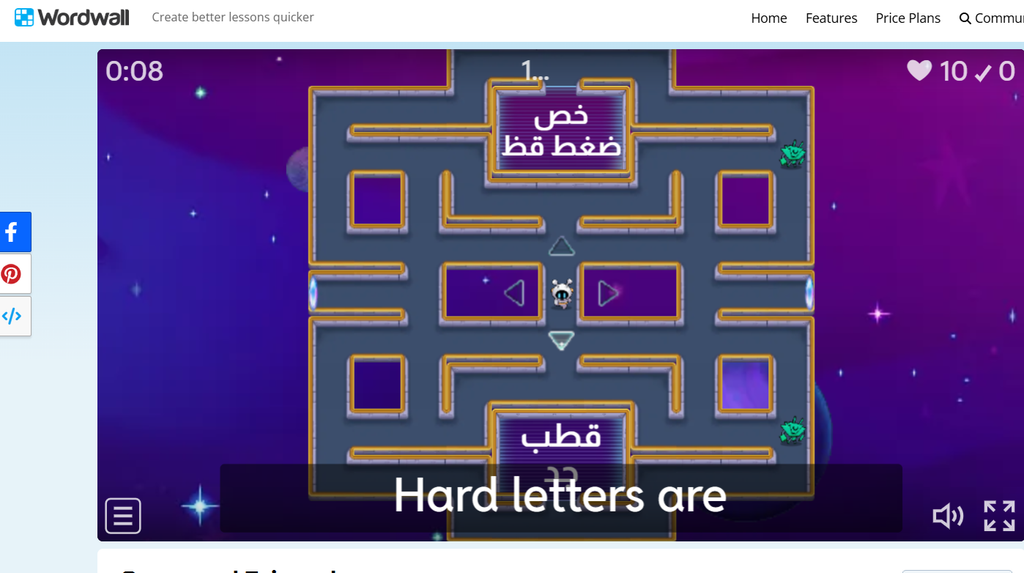
Mutashabihat are verses that look and sound almost the same as verses elsewhere in the Quran. These games fit children who already know several Surahs and keep mixing up the similar ones.
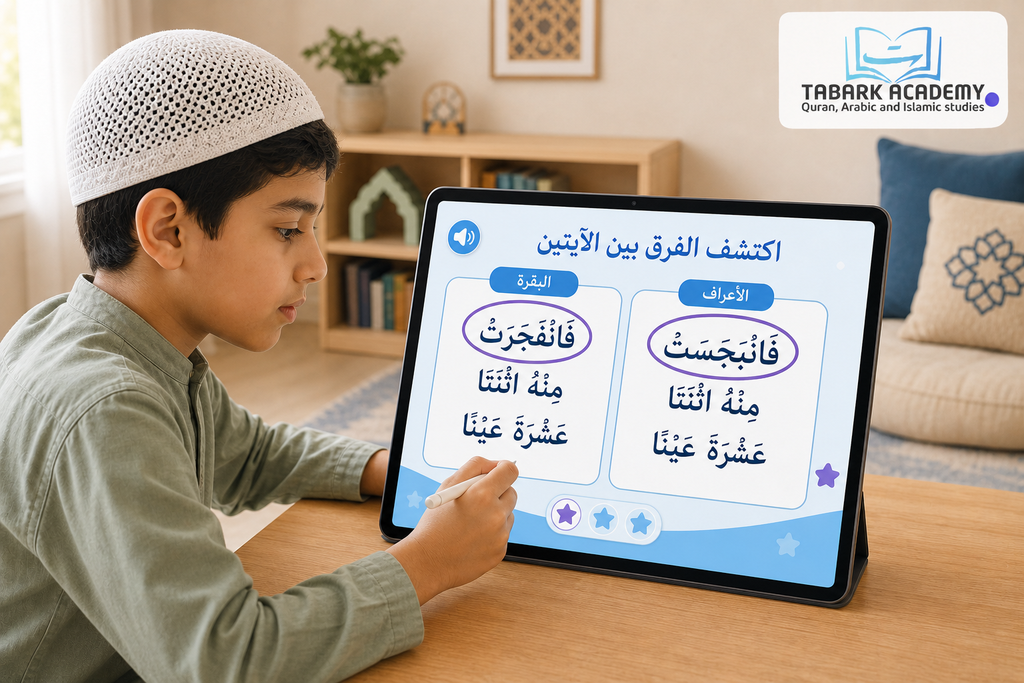
Mutashabihat cause one very annoying kind of mistake. A child reciting one Surah slips into an almost identical verse from another Surah and ends up somewhere else completely, without noticing. The more your child memorizes, the more often this happens. That’s why it hits strong memorizers the most.
Puzzle games give your child a reason to put two similar verses next to each other and find the one word that makes them different.
Read also: How Many Surahs Are in Juz Amma? Find Out Here
Some apps turn this into levels to finish or clues to unlock. On paper, write two similar ayahs on one sheet and ask your child to circle every difference. It works the same way.
The same idea works for Tajweed. Instead of memorizing rule definitions, your child finds where an Idgham or a Qalqalah happens in a Surah they already know. That makes the rule real instead of abstract. Expect this level to be too hard before about age ten.
5. Card and Memory Matching Games
Children match a word, a picture, or a sound to its correct pair, just like a classic memory card game. Linking how a verse sounds to how it looks in writing uses two senses at once instead of one.
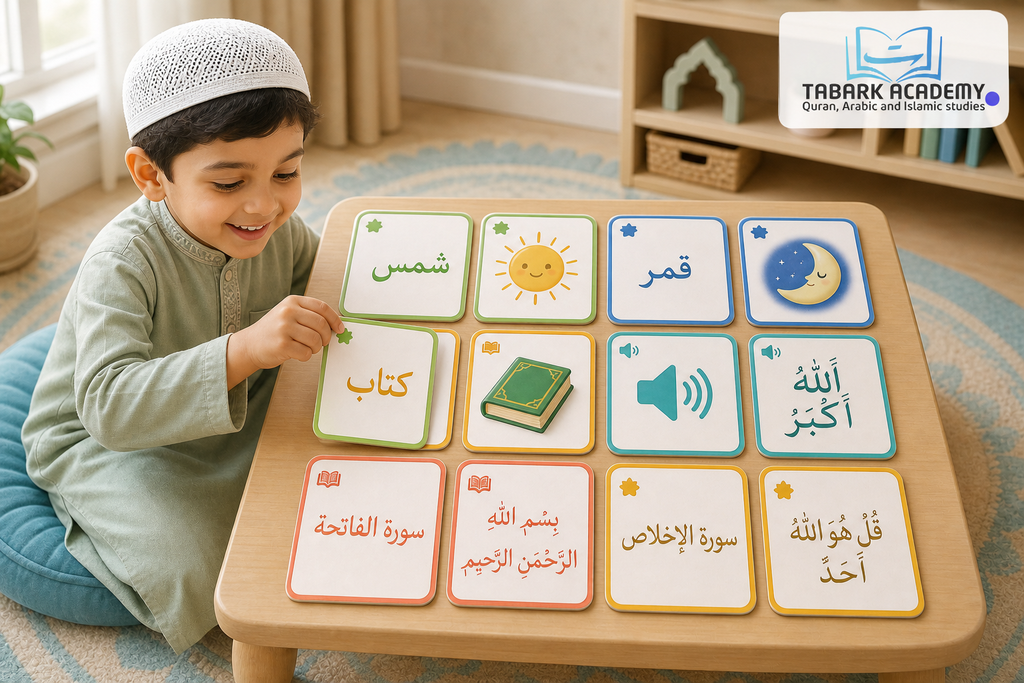
Anything your child learns through two senses is easier to recall than something learned through one. When they connect the sound of an ayah to its written shape, or to a picture of its meaning, they get two different ways back to the same verse. If one way fails, the other usually holds.
A few pairings work well: a Surah name with its opening words, an Arabic word with a simple picture of its meaning, or an ayah’s sound with its written line.
Keep the deck small, about six to eight pairs, and add new cards only when the current ones feel easy. A big deck makes the game slow and boring, and your child stops asking to play.
This is usually the best place to start with children aged four to six, before reading and word-order games make sense.
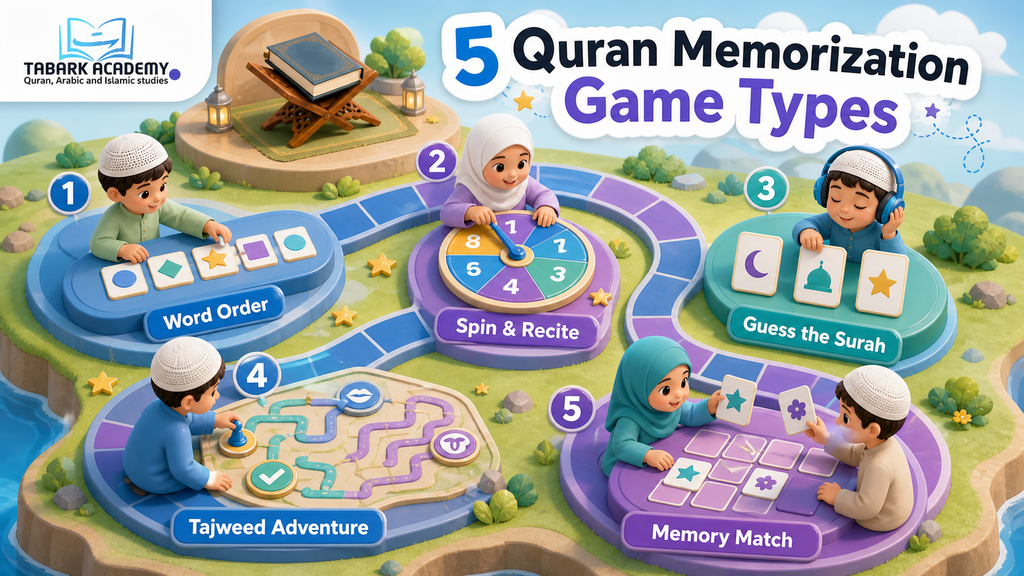
| Game Type | Skill Reinforced | Best For |
| Complete-the-ayah / word order | Sequencing | New memorization |
| Spinning wheel | Random recall | Daily review |
| Guess-the-Surah | Listening & connection | Ages 6–10 |
| Tajweed/mutashabihat puzzles | Distinguishing similar verses | Ages 10+ |
| Card matching | Visual + audio memory | Younger beginners |
What Are The Screen – Free Quran Memorization Games You Can Play At Home?
Not every Quran memorization game needs a screen, which matters for parents managing screen time. A few low-effort options work just as well with paper and a bit of imagination.
Write memorized ayahs on separate cards, shuffle them, and have your child pull one at random to recite. It’s a paper version of the spinning wheel. For word order, write an ayah’s words on individual slips and ask your child to arrange them correctly against the clock.
A weekend “family Surah quiz,” where siblings or parents take turns testing each other, adds social motivation without any app at all.
Read also: 3 Effective Ways to Preserve Your Children Identity in The West
Why Do Quran Memorization Games Work for Children?
Quran memorization games work for children because they turn passive repetition into active recall, the memory process that actually strengthens retention. Simply, re-reading a verse is far weaker than being asked to produce it from memory.
This is why a spinning-wheel or guess-the-Surah format is more than a gimmick. Randomly recalling a verse out of sequence forces the brain to retrieve it independently. That is exactly what real recitation in prayer demands.
Games also solve a practical problem. Children forget memorized verses quickly without frequent review, but plain repetition bores them fast. A short daily game keeps review sessions consistent without turning into a battle over attention.
This is exactly the gap Tabarak Academy’s Hifz for Kids program is built to close, with gamified Muraja’ah woven into every lesson so review stays consistent without becoming a fight over screen time.
How to Choose Safe and Effective Quran Games for Your Child
Effective Quran memorization games use audio from a reliable, clearly articulated reciter, since children copy what they hear, mistakes included. Check that any app or platform is ad-free and age-appropriate before handing it to your child unsupervised.
Every game, digital or paper, shares one limit: it can’t hear a mispronounced letter and correct it on the spot. Games work best as review between lessons, not as a stand-in for a teacher who can catch and fix errors as they happen.

Read about: How To Start Memorizing The Quran As A Beginner?
Step Inside Our Virtual Classrooms
See our engaging teaching methods in action! watch real snippets of our live classes and discover how our expert instructors make learning interactive, memorable, and inspiring for every student.
Turn Hifz Into a Game Your Child Actually Enjoys with Tabarak Academy Today
Tabarak Academy builds gamification directly into its Hifz for Kids program rather than leaving review to a separate app. Lessons include point-based revision games, verbal Surah challenges, and custom review cycles. These run in every session, not as an occasional add-on.
Each class is split deliberately: roughly ten minutes of Muraja’ah, twenty minutes of new memorization, and five minutes of Tajweed correction. Children hear every new ayah at least twenty times before reciting it independently.
Watch real-life fun classes at Tabarak Academy
Sessions run privately, one-on-one, for 30, 45, or 60 minutes, at times that fit your family’s schedule. All instructors hold verified Al-Azhar Ijazah certification, and female Huffaz teachers are available for girls and sisters at no extra cost.
Arabic Alphabet for Kids | Fun Learning
Most children complete Juz Amma within three to eight months, with retention checked weekly so nothing slips through unnoticed. There’s no lock-in contract and no card required to start.

Our Quran Memorization / Hifz Courses
- Online Hifz Program
- Juz 30 Memorization Course
- Hifz for Kids Course
- Hifz for Adults Course
- Hifz for Sisters Course
- Short Surah Memorization Course
- Hifz Ijazah Course
Conclusion
Quran memorization games work for one simple reason. They make your child pull verses out of memory instead of just hearing them again, and that pulling is what makes Hifz last. Listening is passive. Recalling is active. Only one of them builds a memory your child still has next month.
You don’t need a complicated setup to start. Shuffle a few cards with memorized Surah names, spin them each afternoon, and ask your child to recite whatever comes up. No app, no printing, no preparation. If your child is willing to play for five minutes, you already have everything you need.
And five minutes a day does more than an hour once a week. Short, regular recall is what keeps memorized verses within reach. A long session every Friday leaves six days for everything to fade.
Match the game to your child’s age. Matching cards for the youngest. Word-order and listening games in the middle. Mutashabihat and Tajweed puzzles once they’re older. A game that’s too easy gets boring, and one that’s too hard feels like a test — either way, your child stops wanting to play.
Just remember what a game can’t do. It can’t hear a wrong letter and fix it. It can’t tell you that a madd is being shortened, or that one verse has quietly borrowed a word from another. Games keep memorization alive between lessons. A qualified teacher keeps it correct. Your child needs both.
If you want both in one place, Tabarak Academy builds review games into every private Hifz session, with Al-Azhar certified teachers and no contract to start. Book a free trial class and see how your child responds to it.
Frequently Asked Questions
At What Age Can a Child Start Playing Quran Memorization Games?
Children can start simple Quran memorization games from around age four, using listening and matching formats rather than reading-based ones. Word-order and complete-the-ayah games suit ages six and up. Tajweed and mutashabihat puzzles work best from age ten, once a child already holds several Surahs in memory.
How Long Should a Quran Memorization Game Session Last for Kids?
A Quran memorization game session should last five to ten minutes for young children and up to fifteen minutes for older ones. Short and daily beats long and occasional. Review games are meant to warm up recall before a lesson, not to replace the focused memorization block that follows.
Can Quran Memorization Games Replace a Qualified Quran Teacher?
No, Quran memorization games cannot replace a qualified teacher. A game cannot hear a mispronounced letter, correct a Tajweed error, or adjust the daily portion when a child struggles. Games are review tools that sit between lessons, keeping memorized verses fresh while a teacher handles accuracy and progression.
Is It Disrespectful to Turn Quran Memorization Into a Game?
Turning Quran memorization into a game is not disrespectful when the Quran text itself is treated with adab. The game applies to the review process, not the words. Scoring recall, timing a challenge, or spinning for a Surah number keeps the child engaged while the verses stay recited correctly and respectfully.
How Often Should My Child Review Memorized Surahs With Games?
Memorized Surahs should be reviewed daily, and games make daily review realistic. A short randomized recall game each day protects recent memorization, while a longer weekend session covering older Juz portions catches what has started to fade. Weekly retention checks reveal which Surahs need extra rounds.
Why Does My Child Memorize Quickly but Forget the Surah Soon After?
Children forget quickly when memorization is not followed by spaced, active review. Reciting a Surah twenty times in one sitting builds short-term familiarity, not long-term storage. Random recall games force the brain to retrieve verses without cues, which is the process that converts fresh memorization into lasting Hifz.
Do Screen-Free Quran Memorization Games Work as Well as Apps?
Screen-free Quran memorization games work just as well as apps because the memory mechanism is identical: random, active recall. Shuffled ayah cards, timed word-order slips, and family Surah quizzes all test retrieval. Paper versions also add parent involvement and social motivation that a solo app session cannot provide.
How Do I Choose a Safe Quran Memorization App for My Child?
Choose a Quran memorization app with audio from a clearly articulated, reliable reciter, since children copy pronunciation errors exactly as they hear them. Confirm the app is ad-free, age-appropriate, and free of in-app purchases or external links before allowing unsupervised use, and preview a full session yourself first.
Does Tabarak Academy Use Games in Its Hifz Classes for Kids?
Yes, Tabarak Academy builds gamified review into every Hifz for Kids session rather than treating it as an add-on. Classes include point-based revision games, verbal Surah challenges, and custom review cycles, with roughly ten minutes of Muraja’ah, twenty minutes of new memorization, and five minutes of Tajweed correction.